
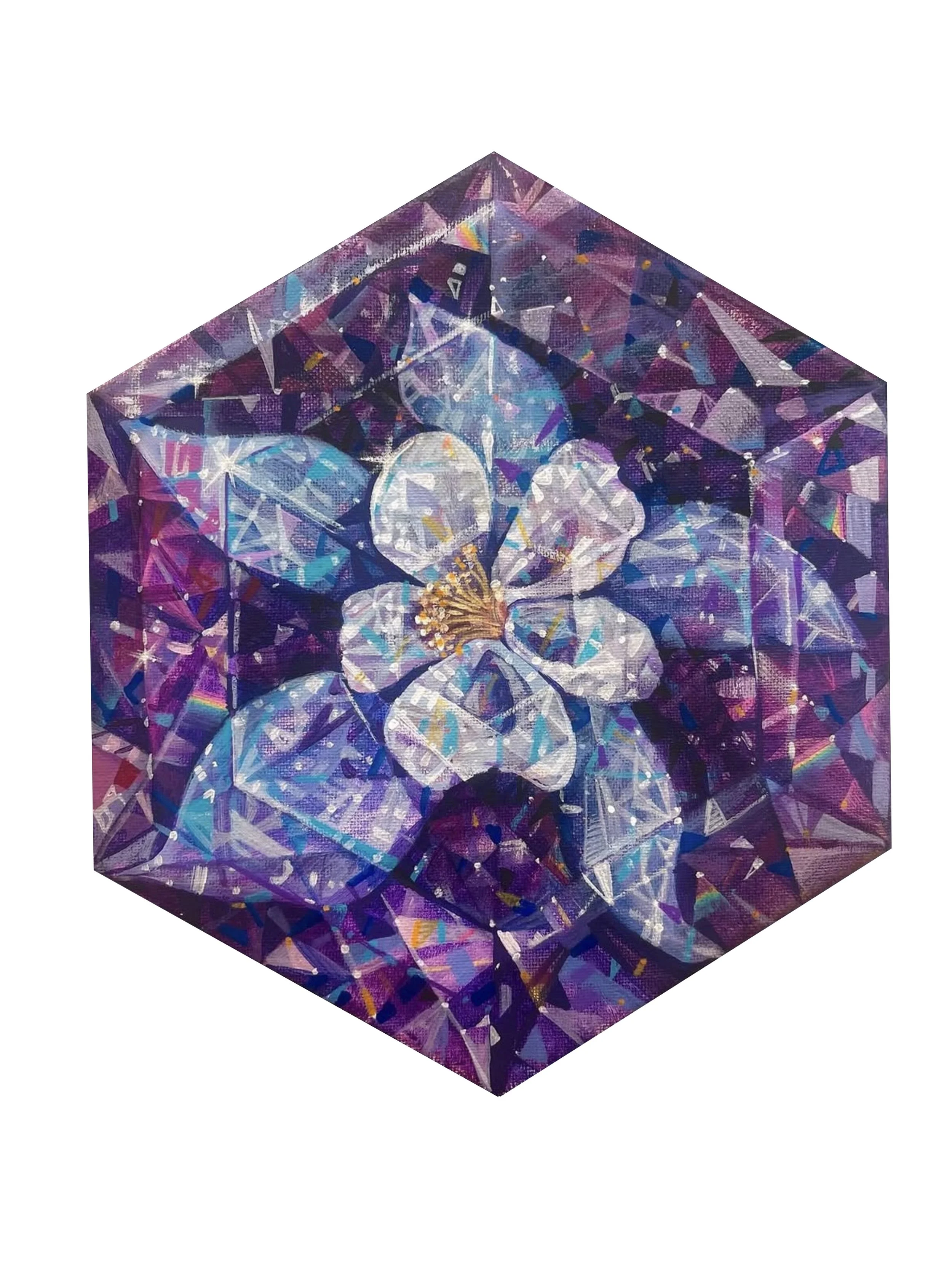
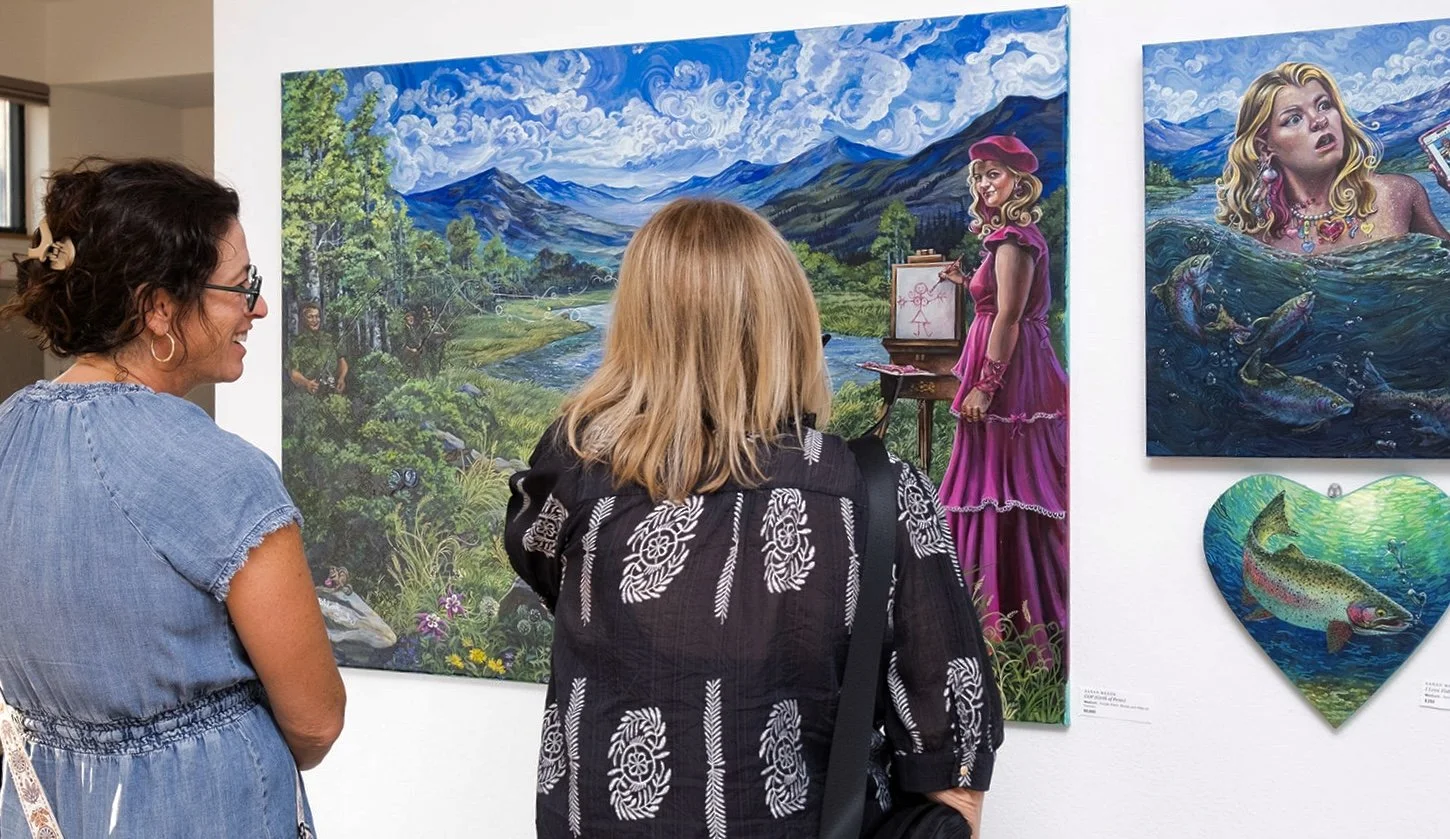
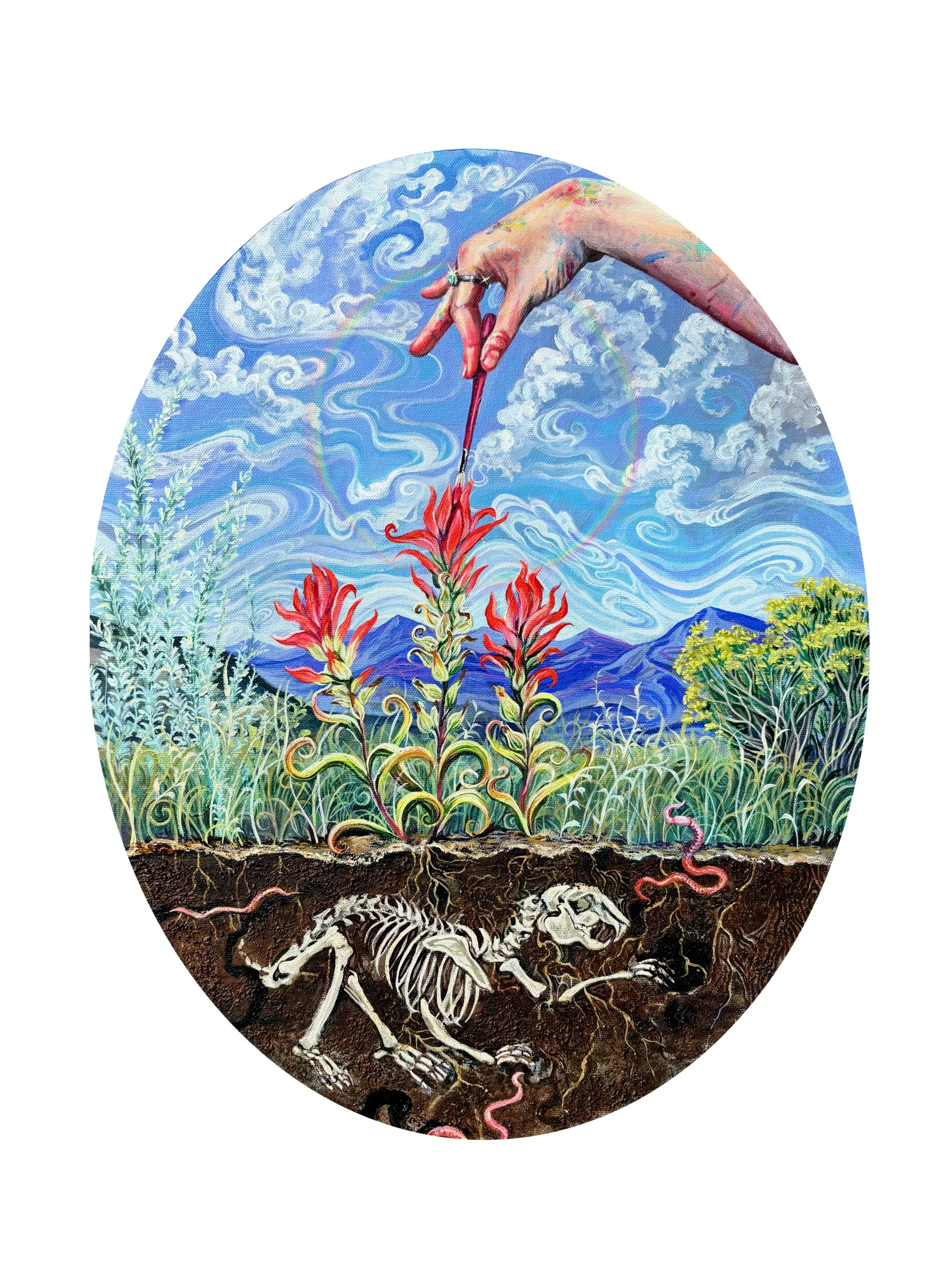
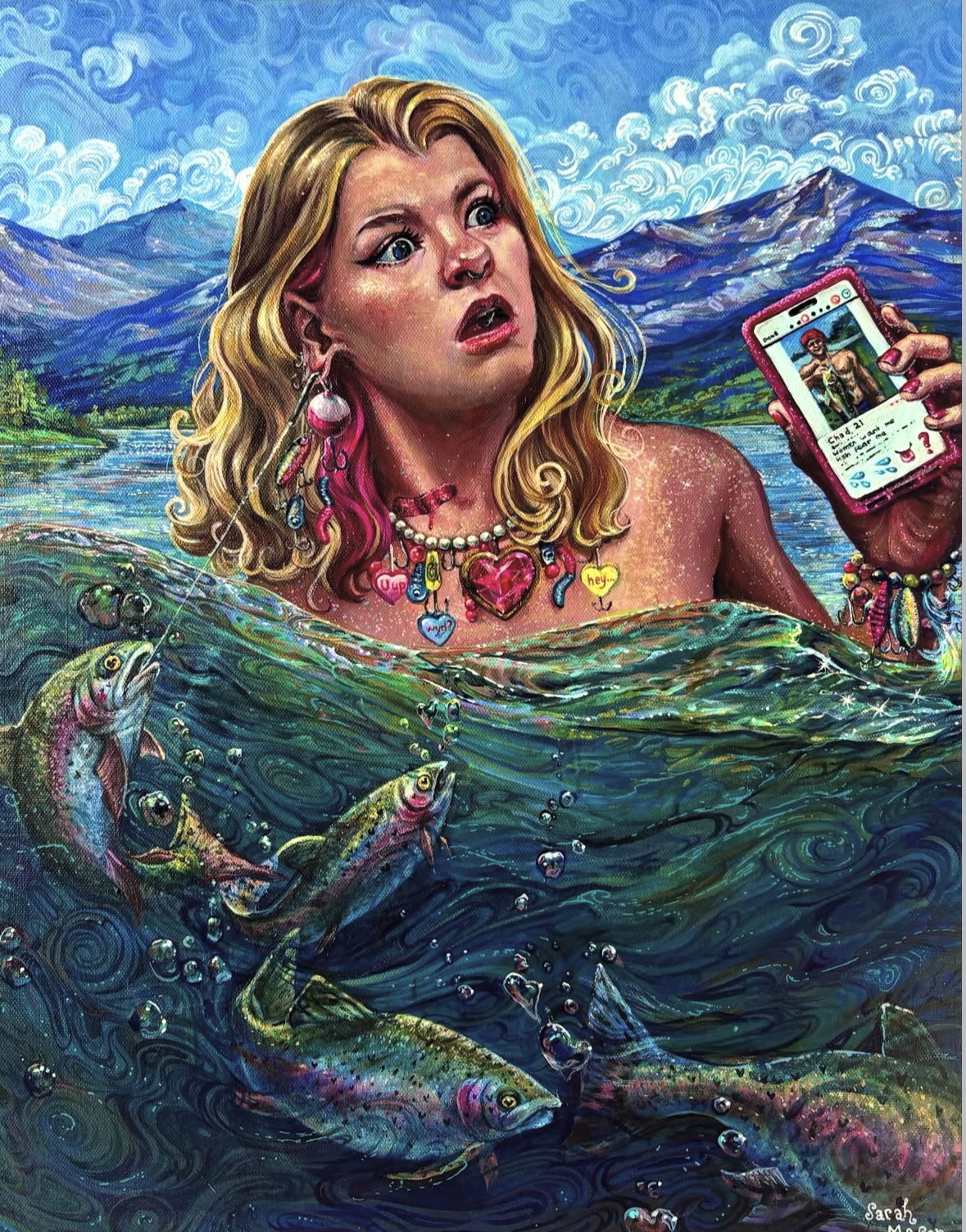
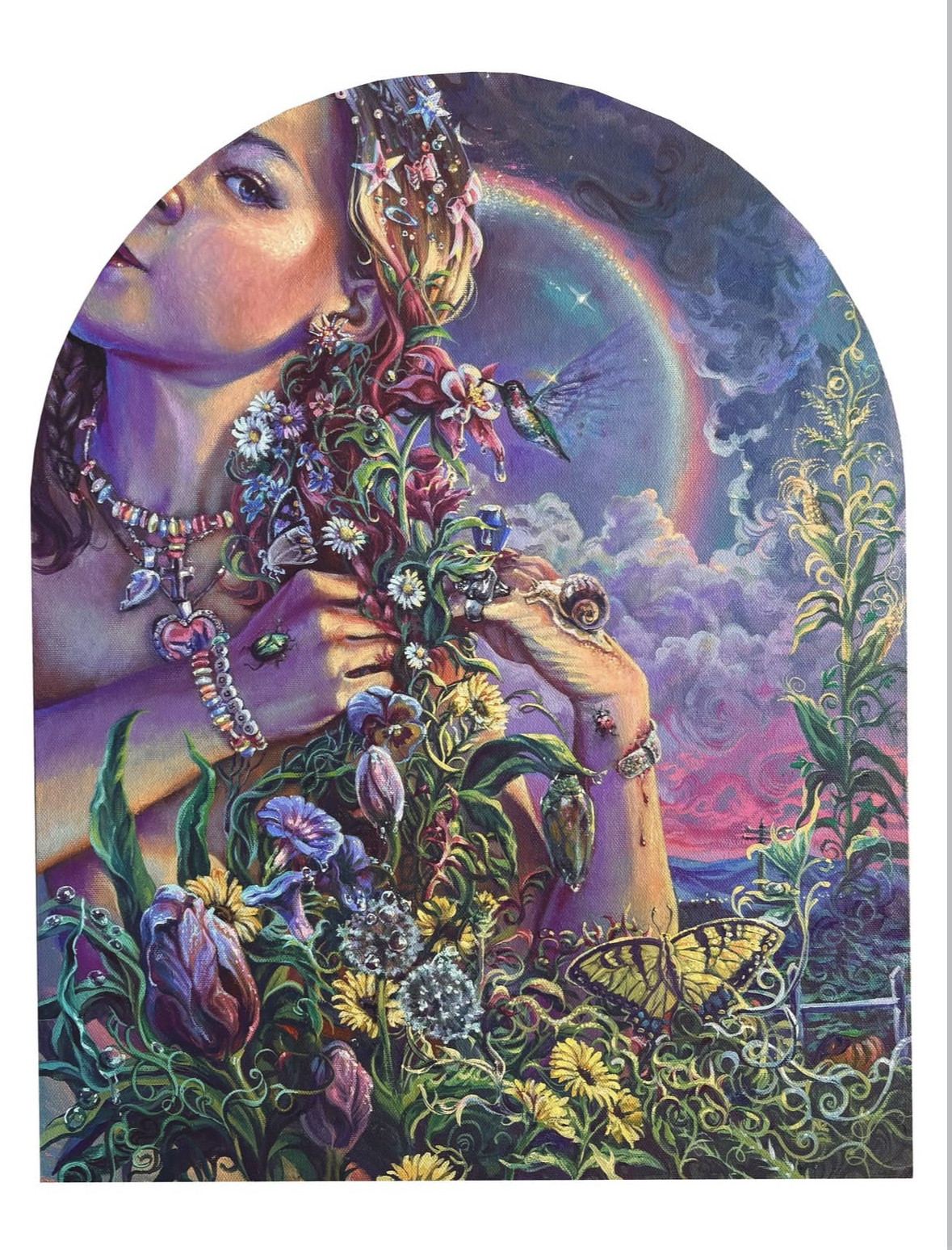
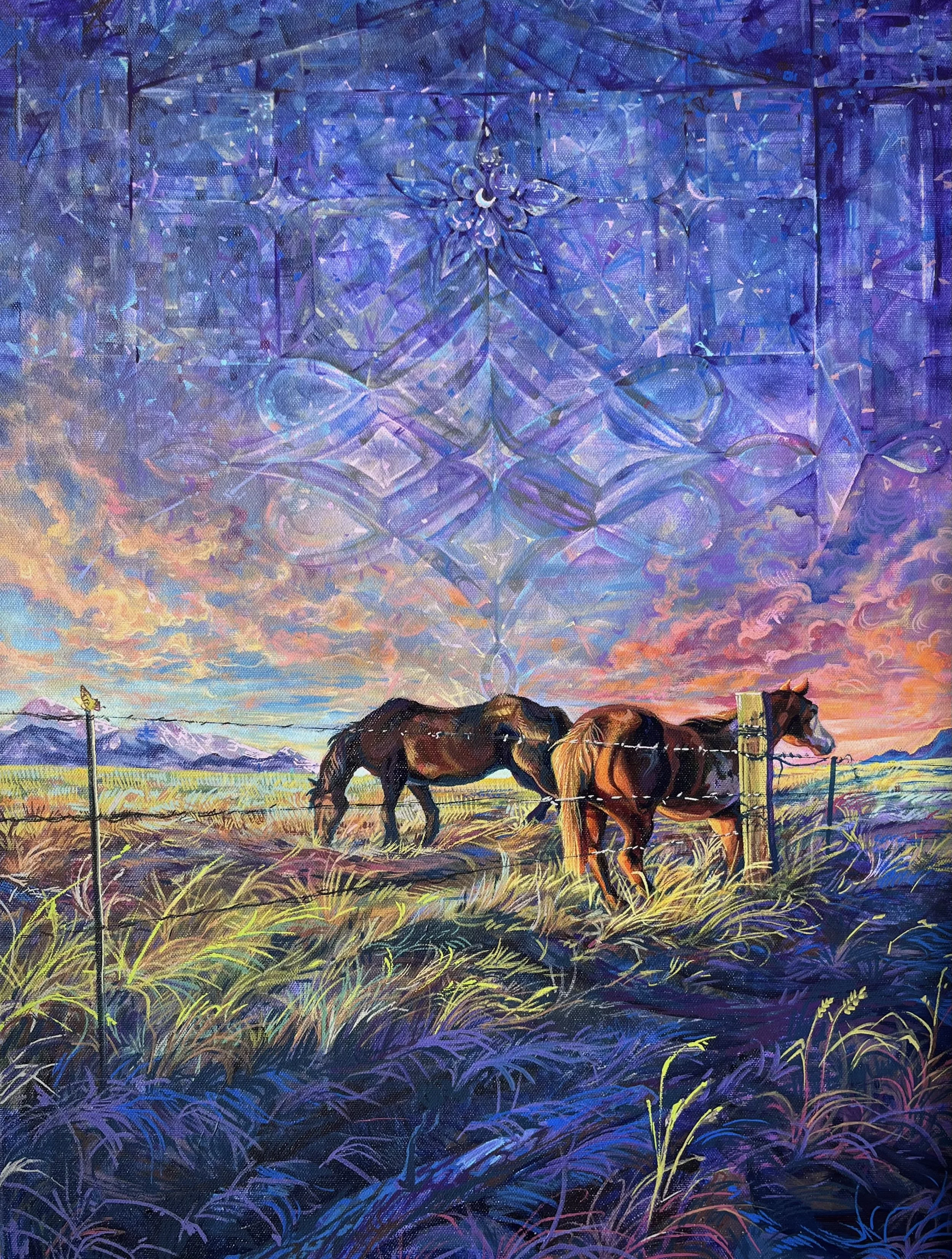
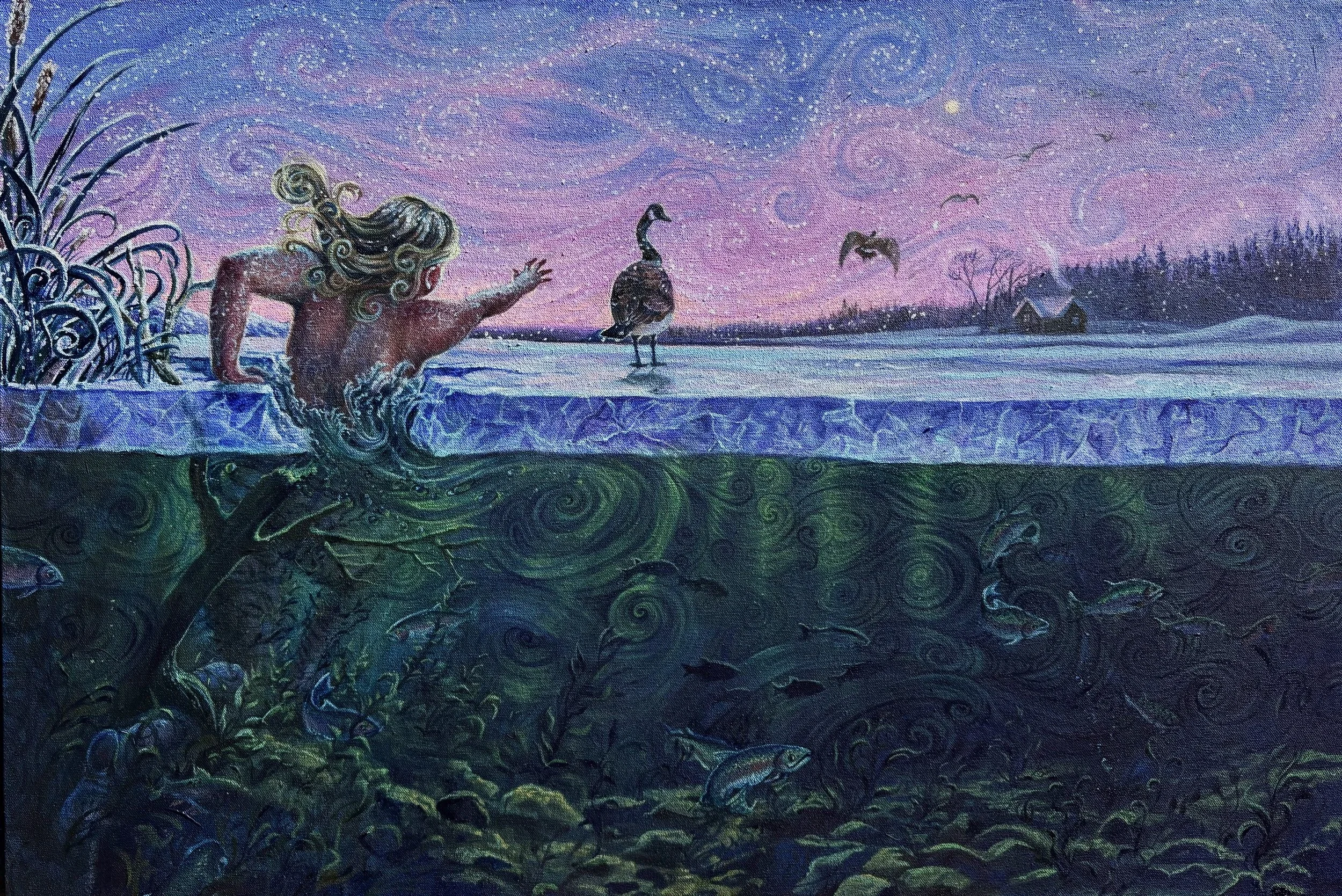
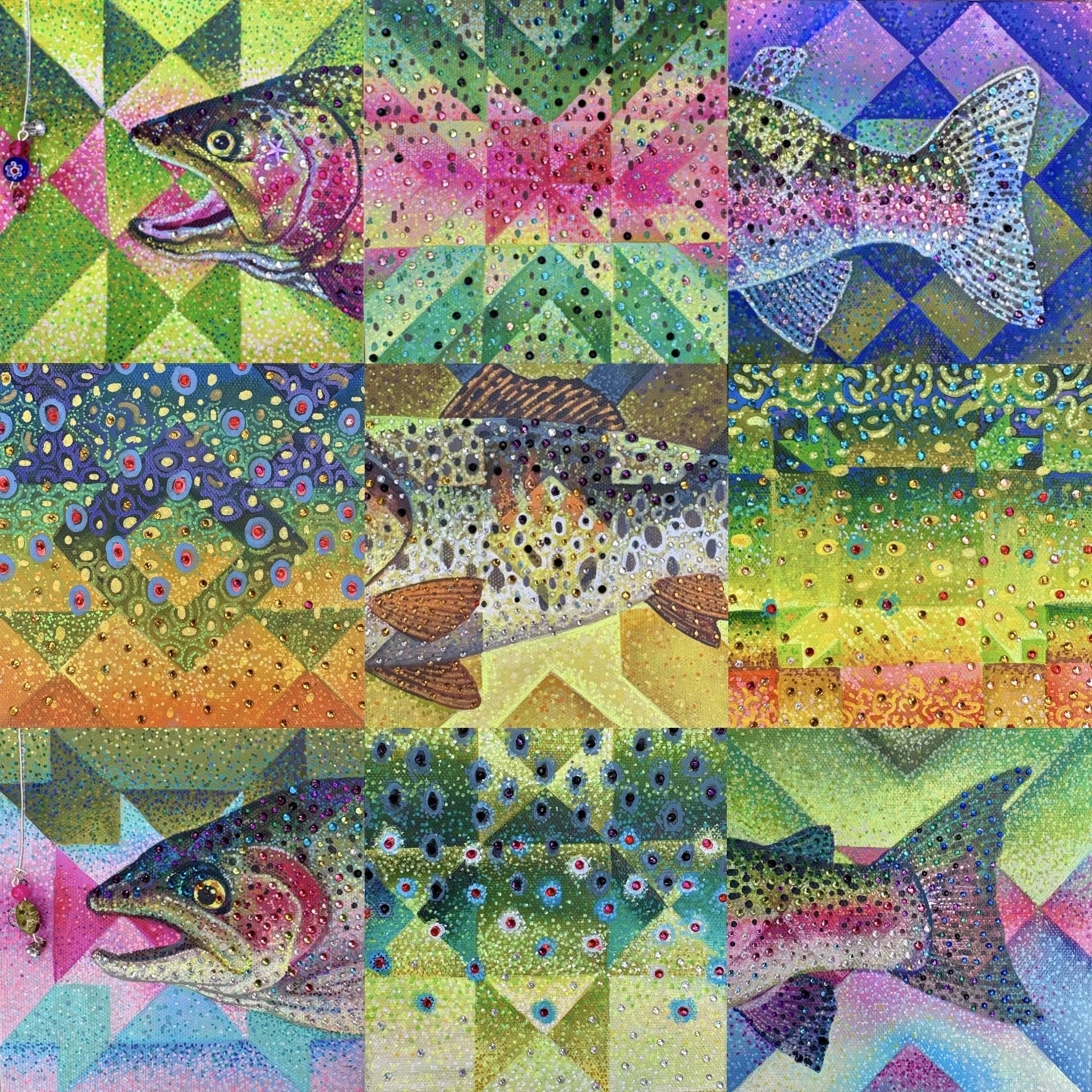
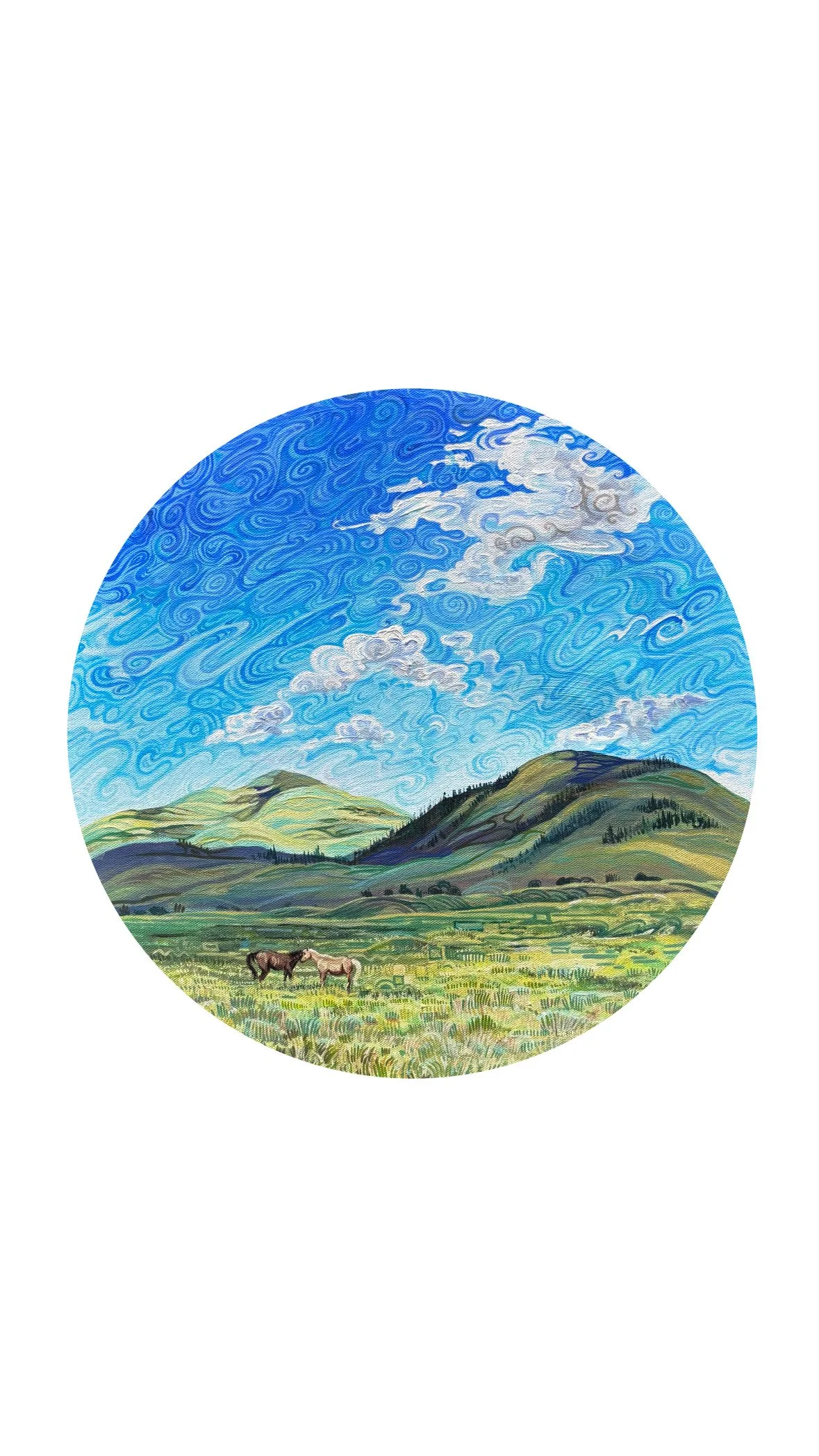
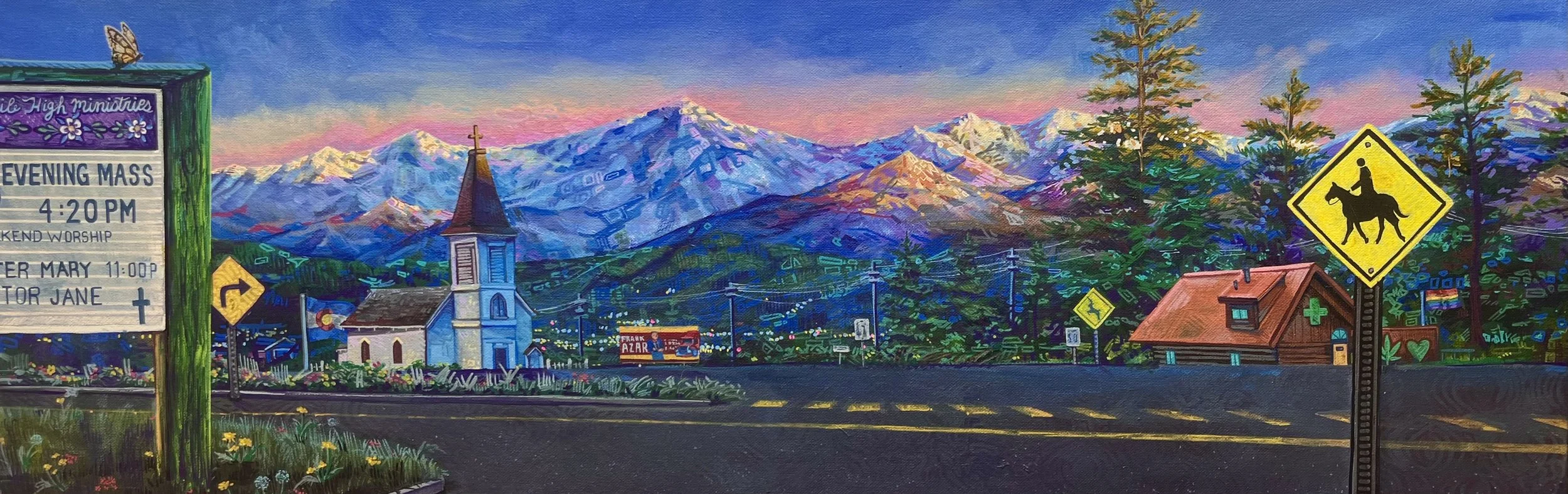
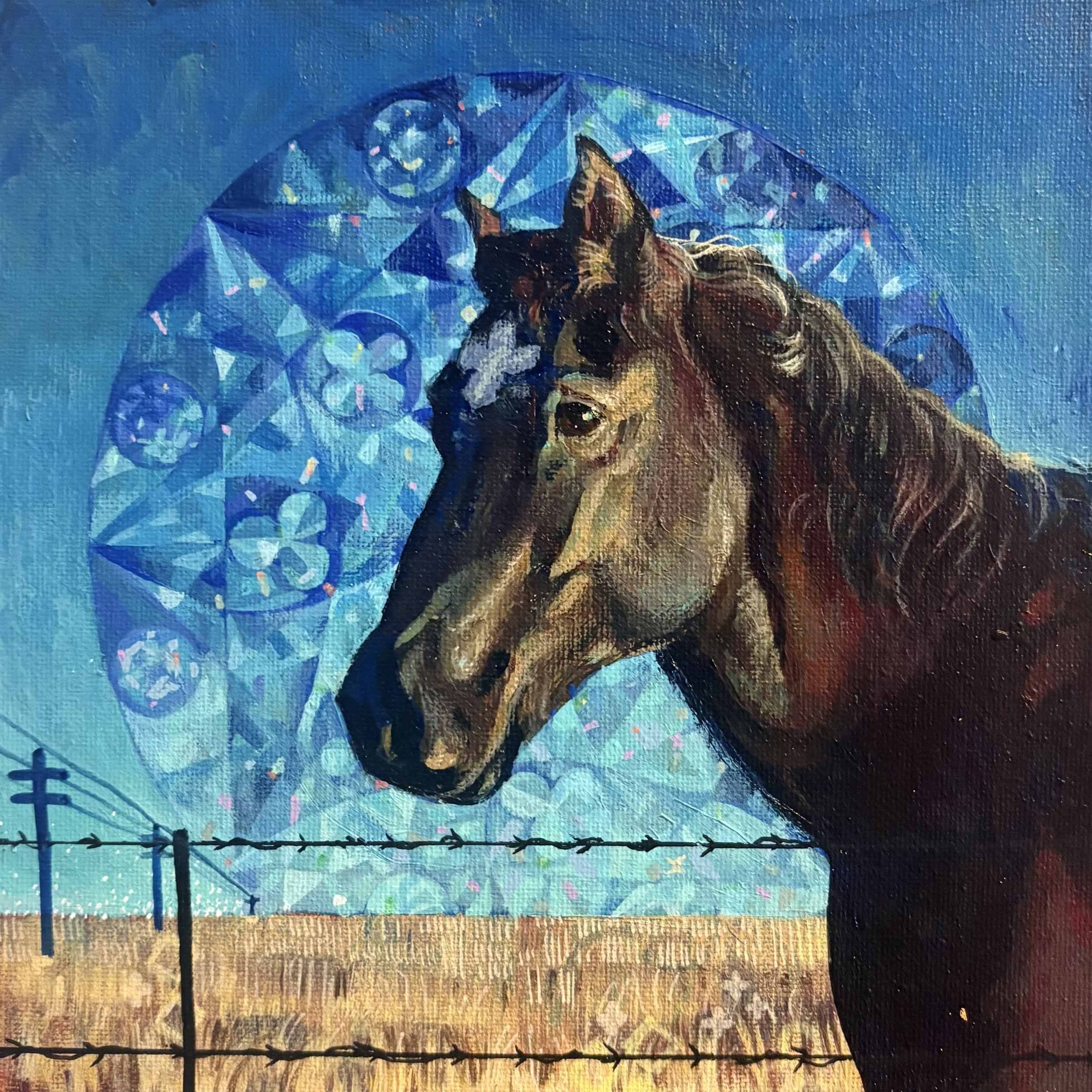
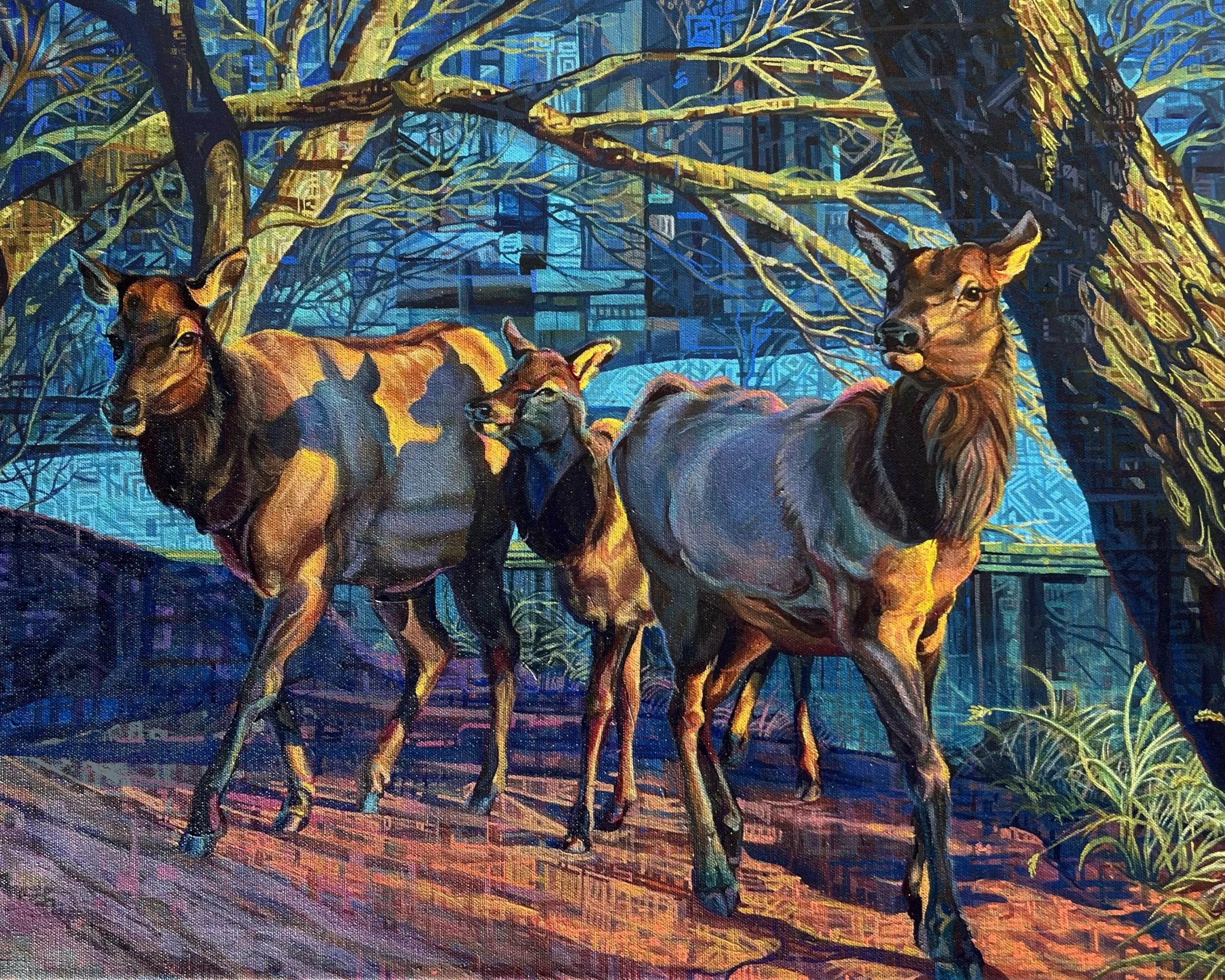
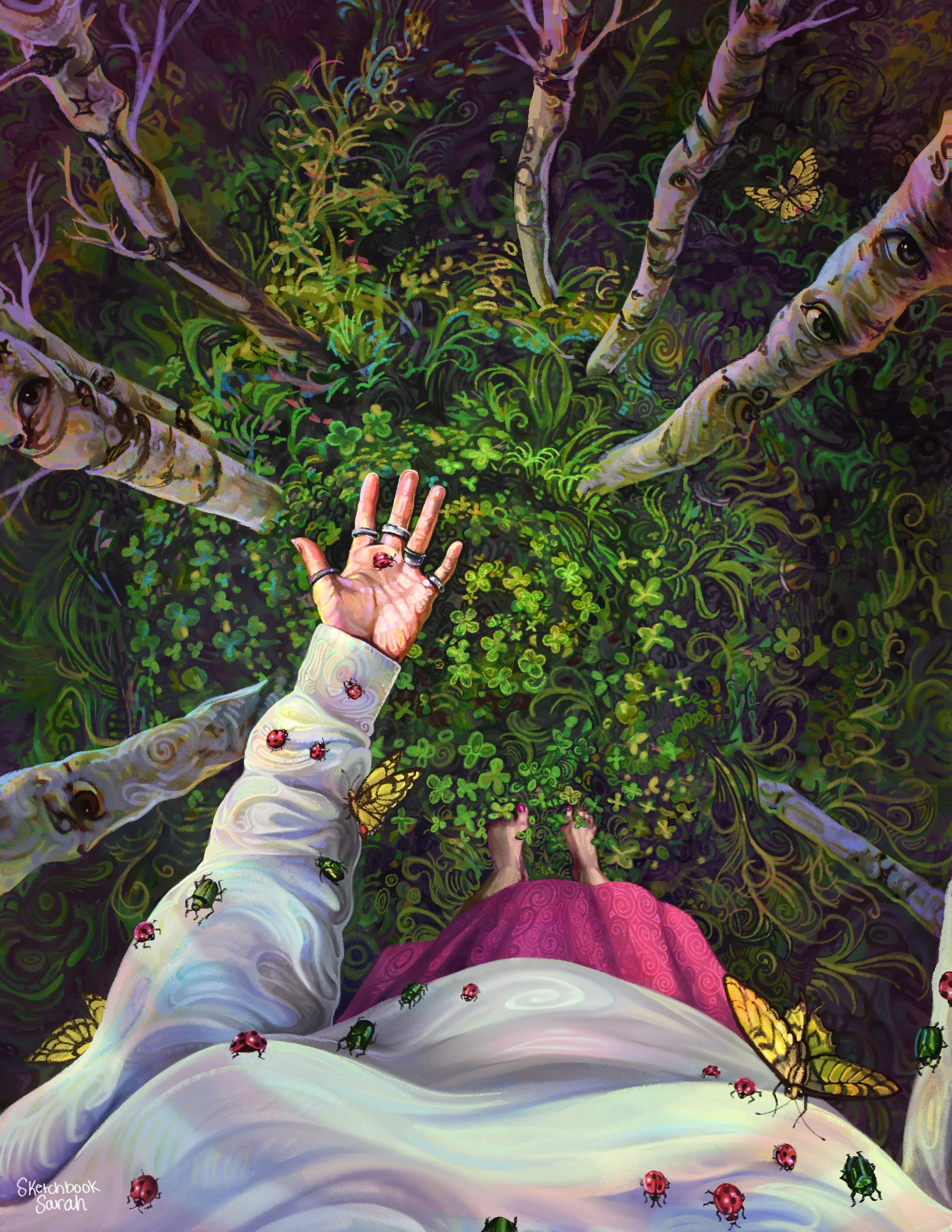
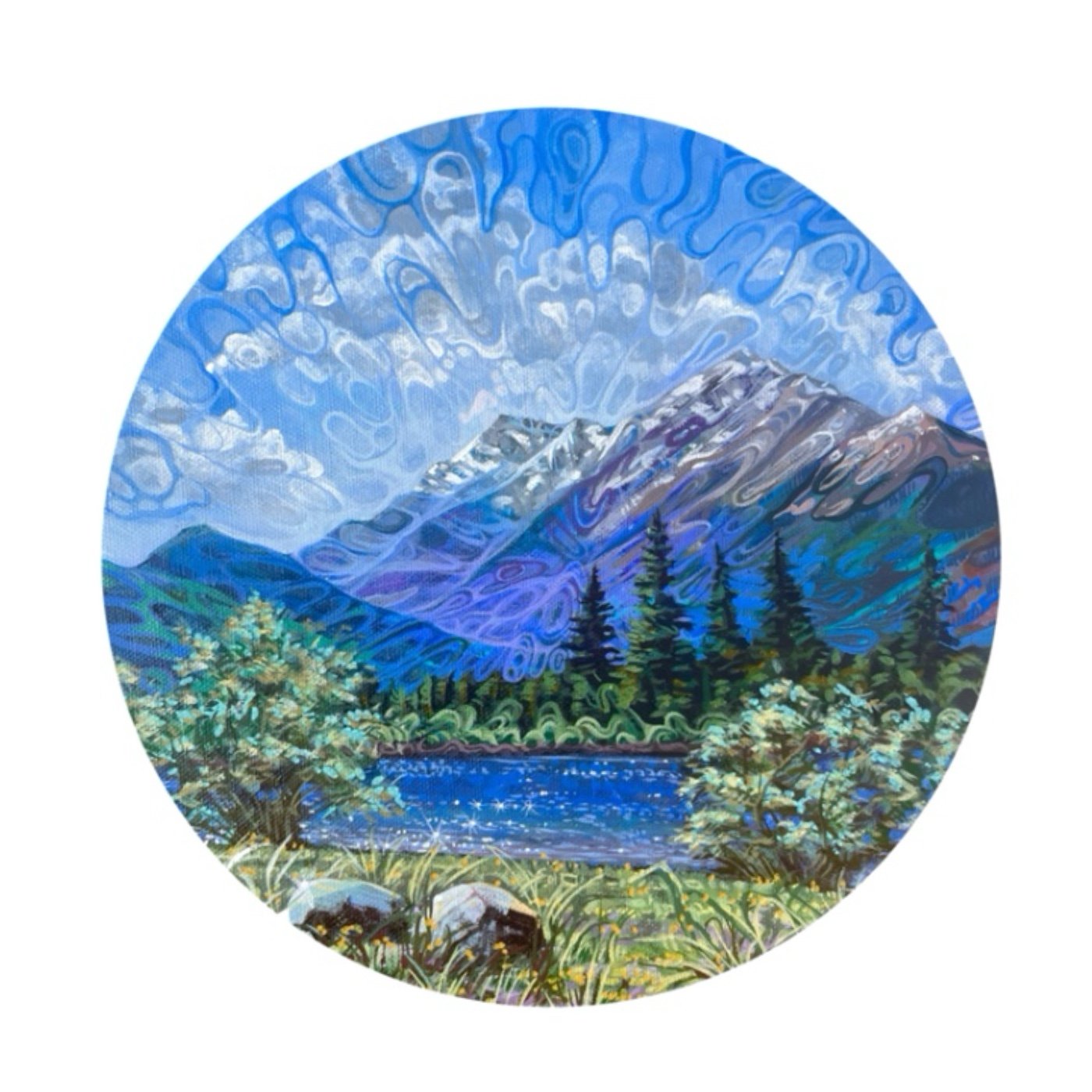
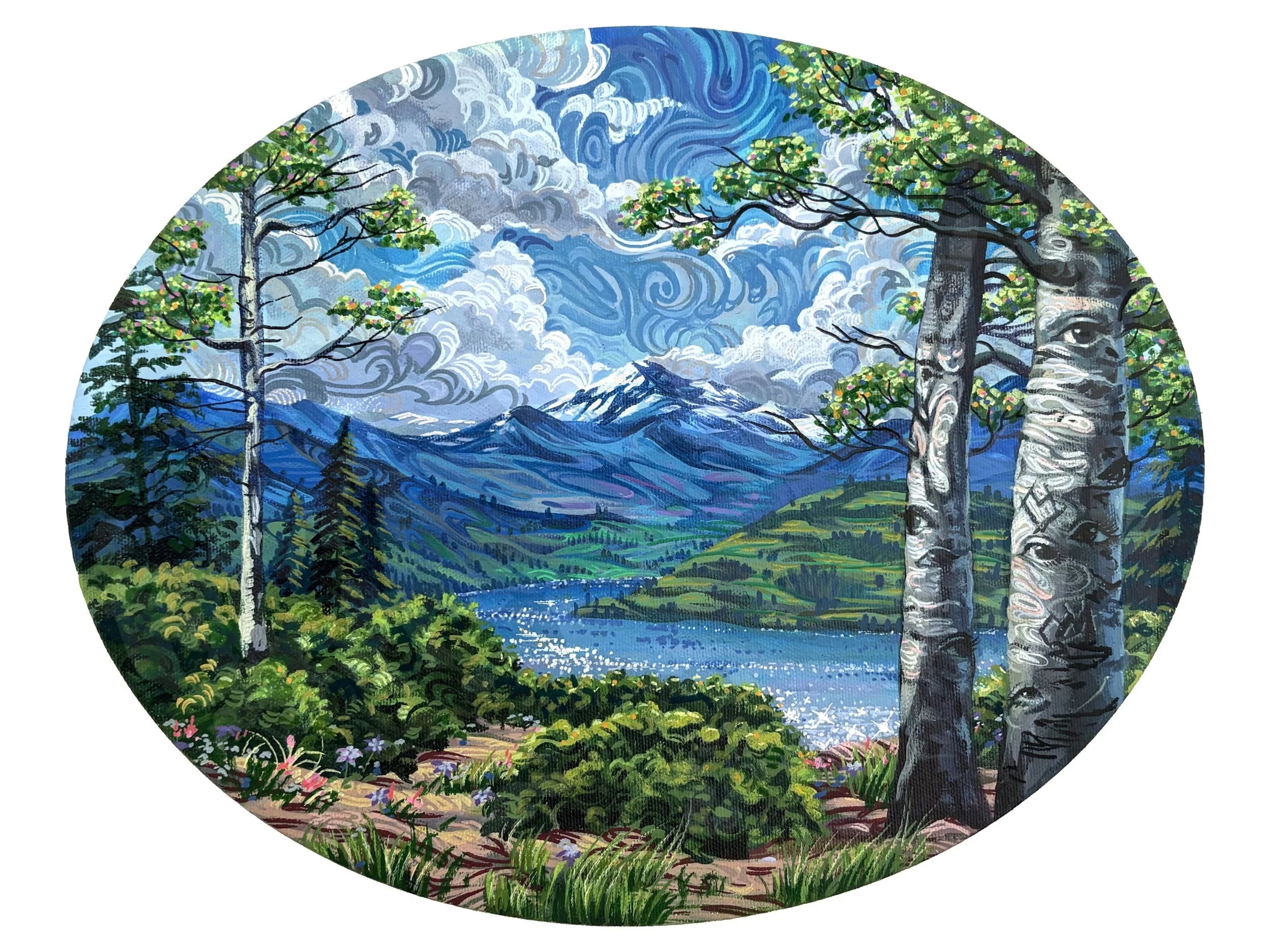
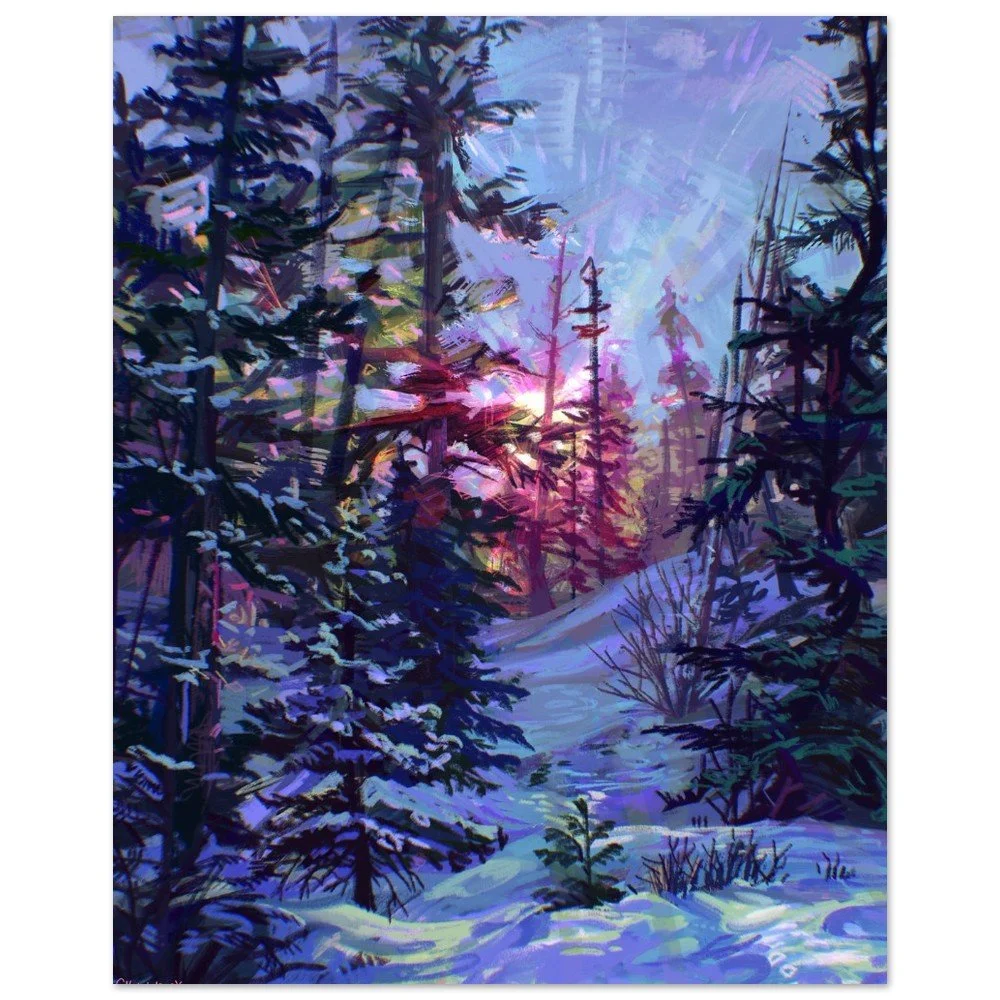
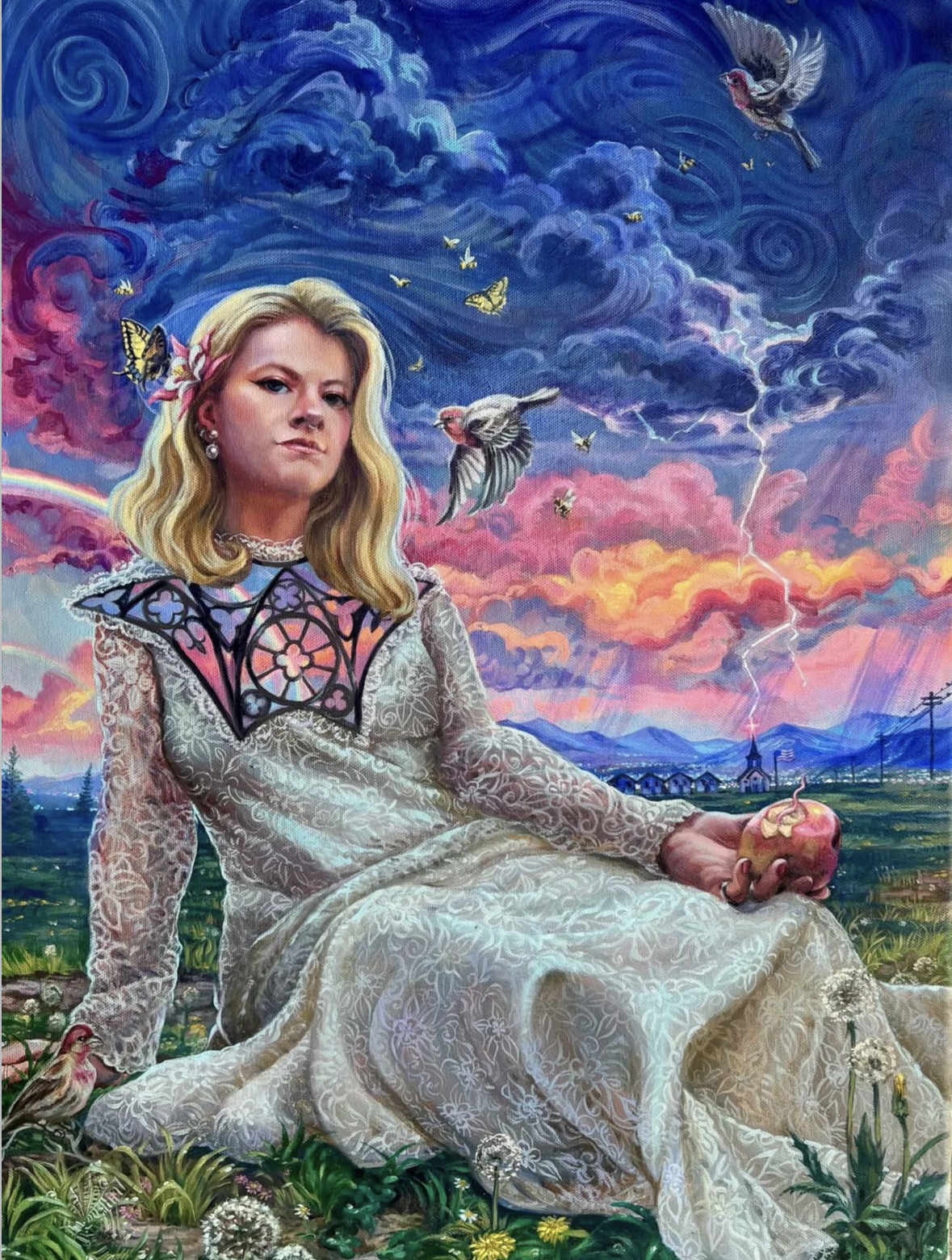
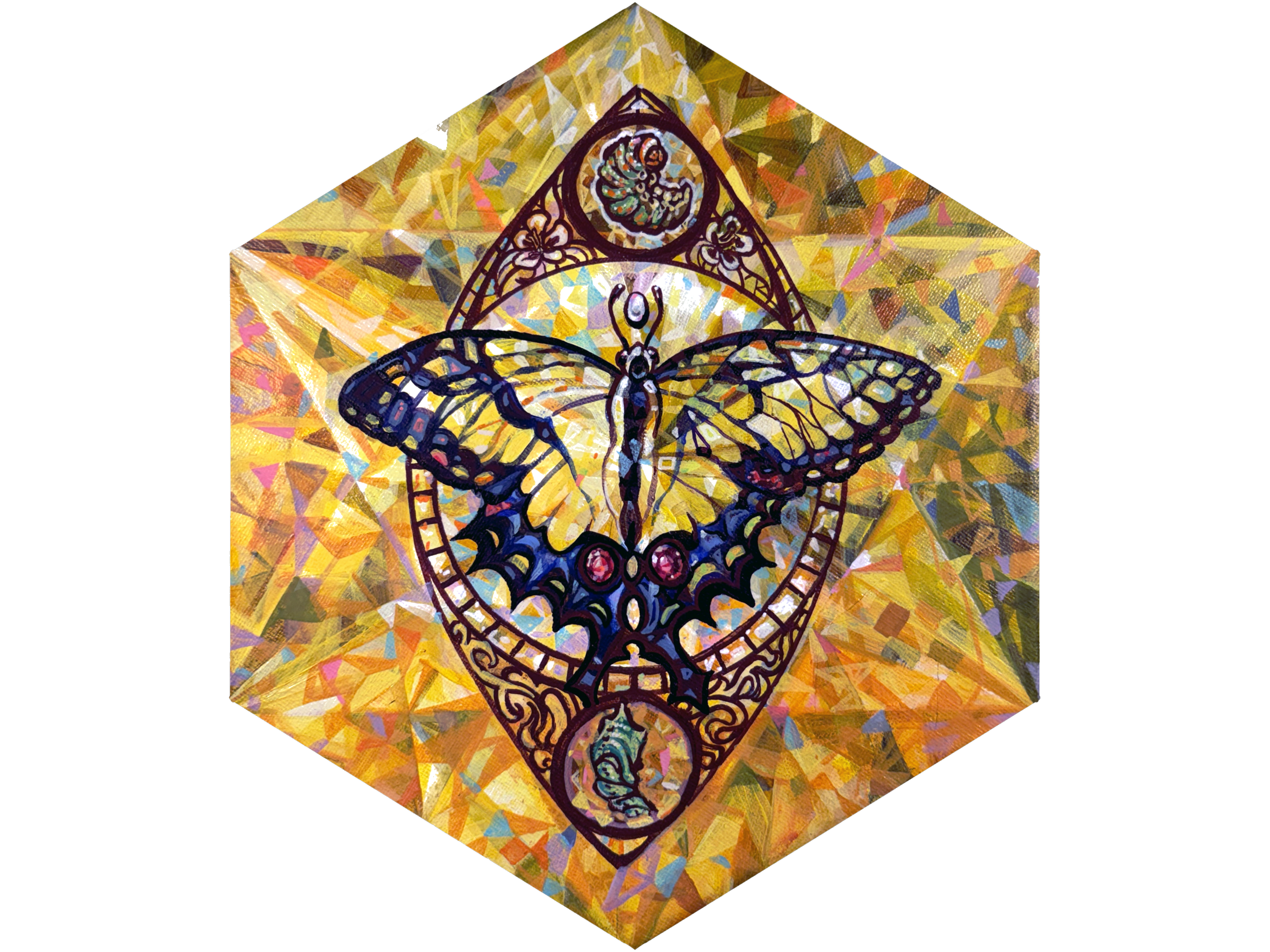
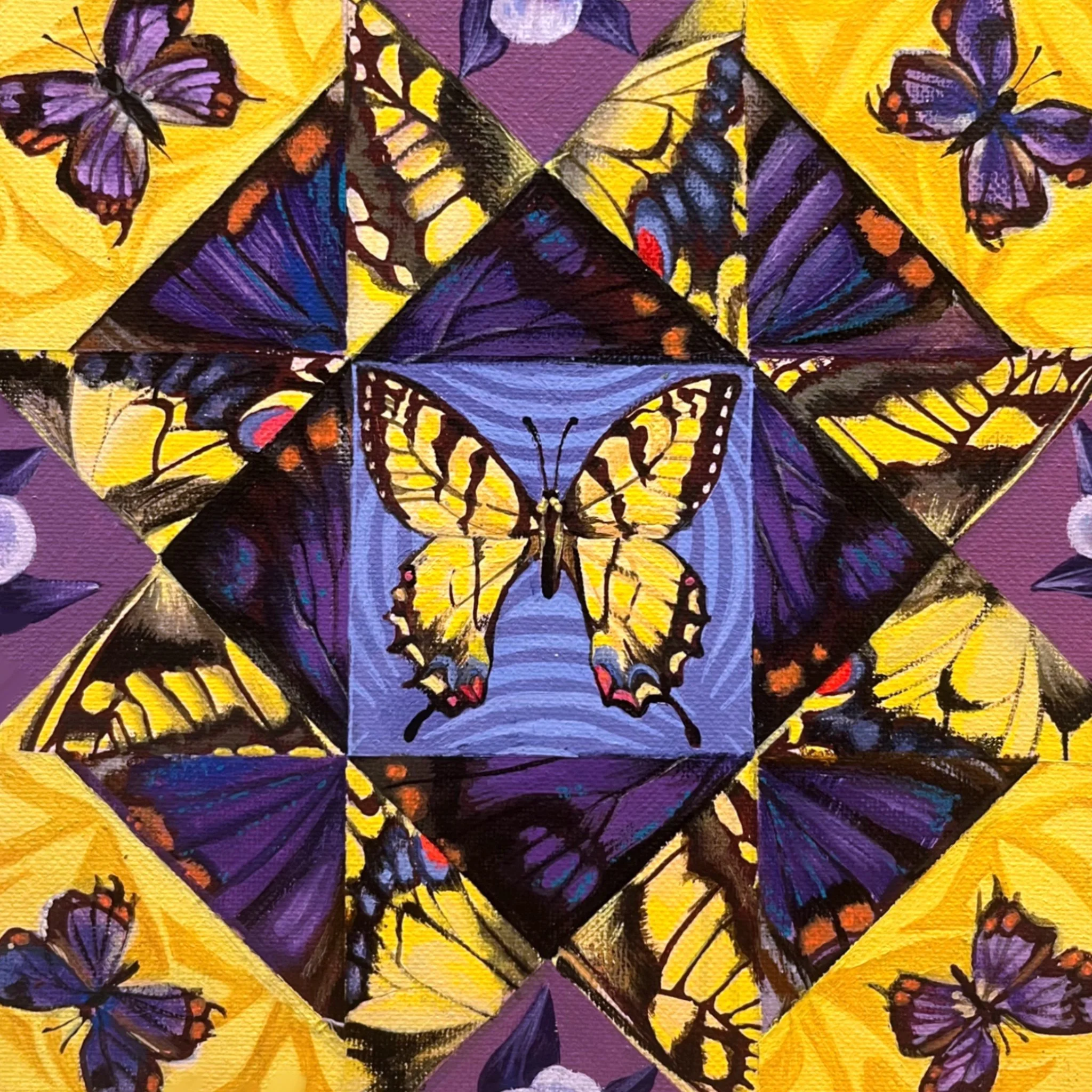
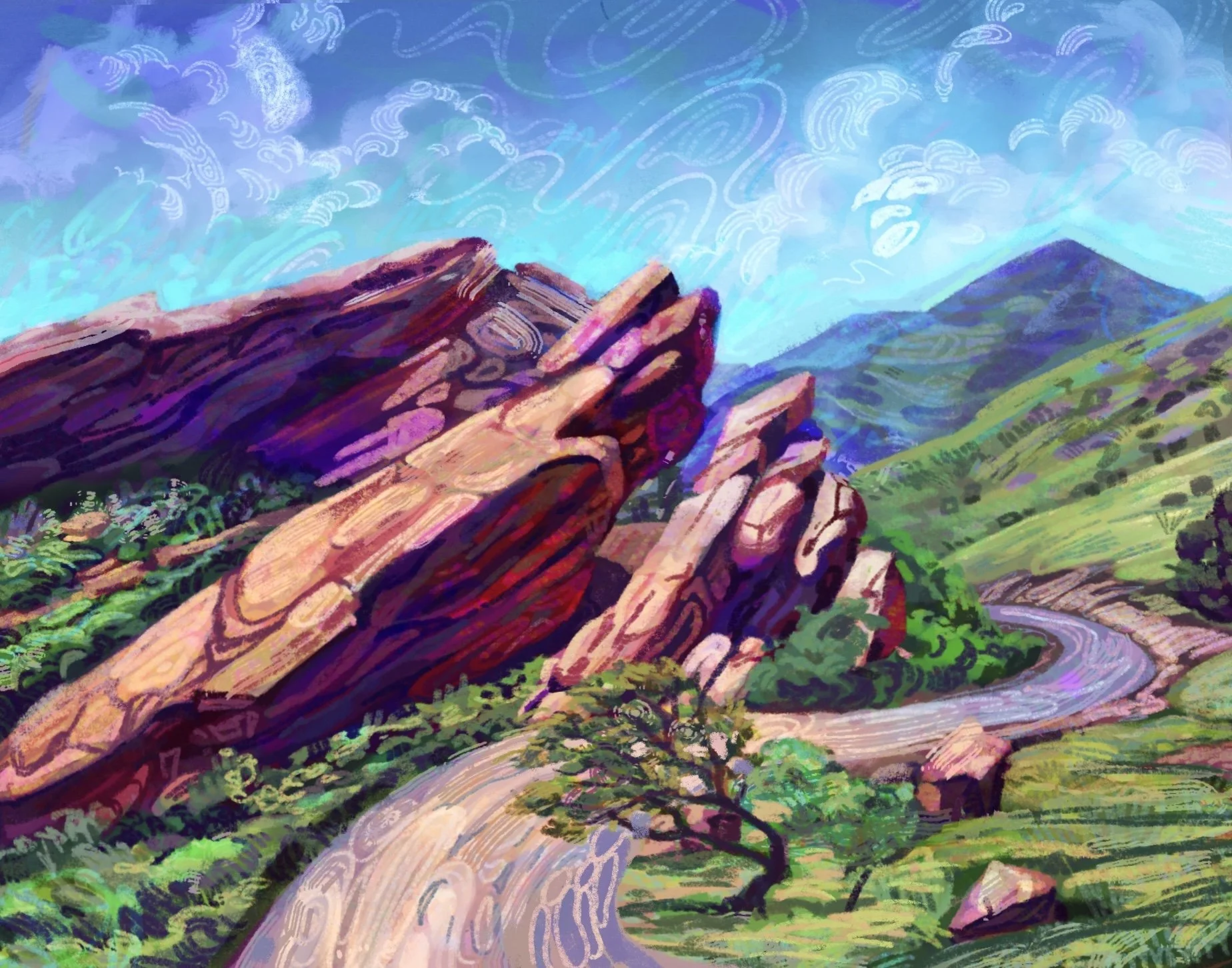
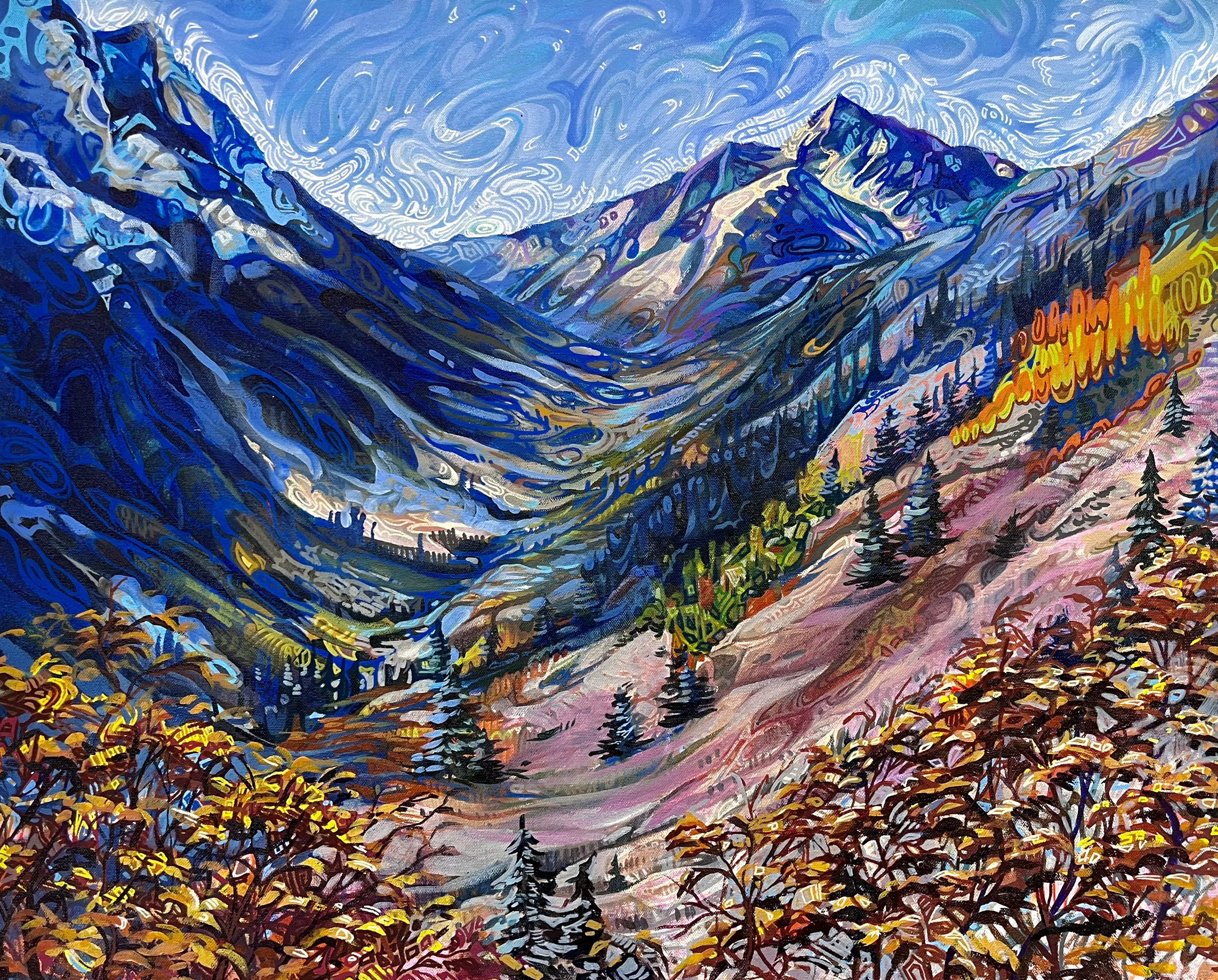
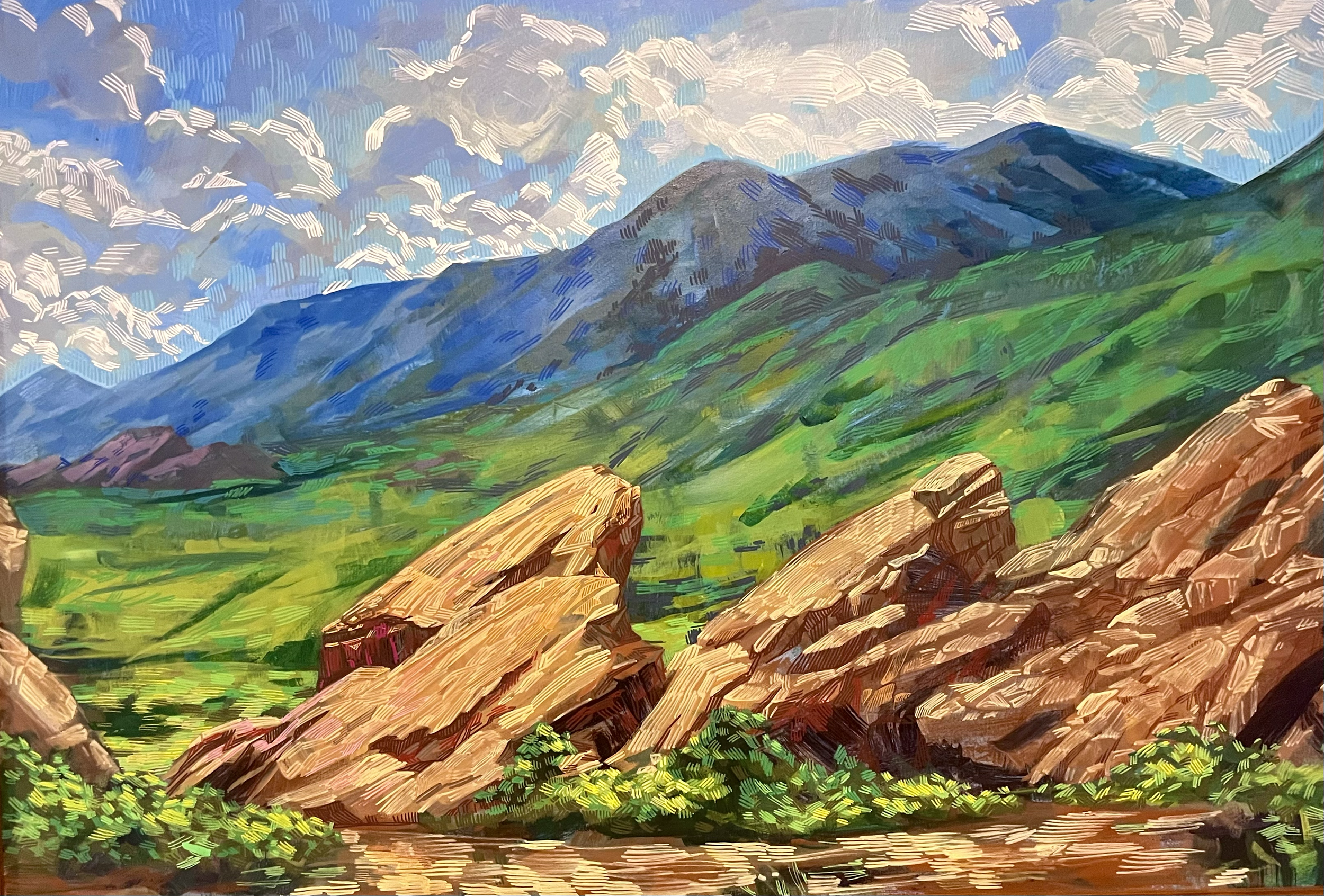
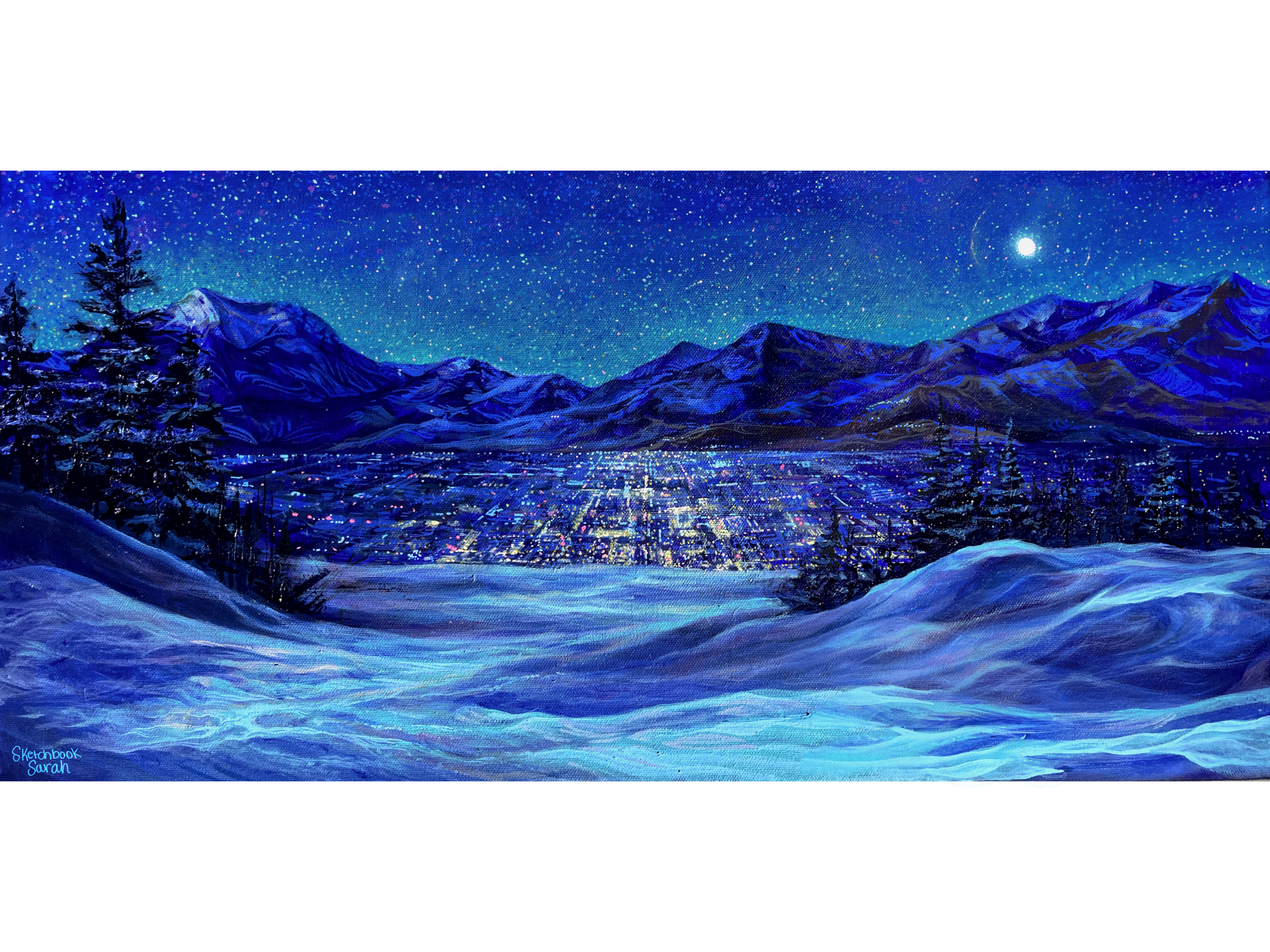
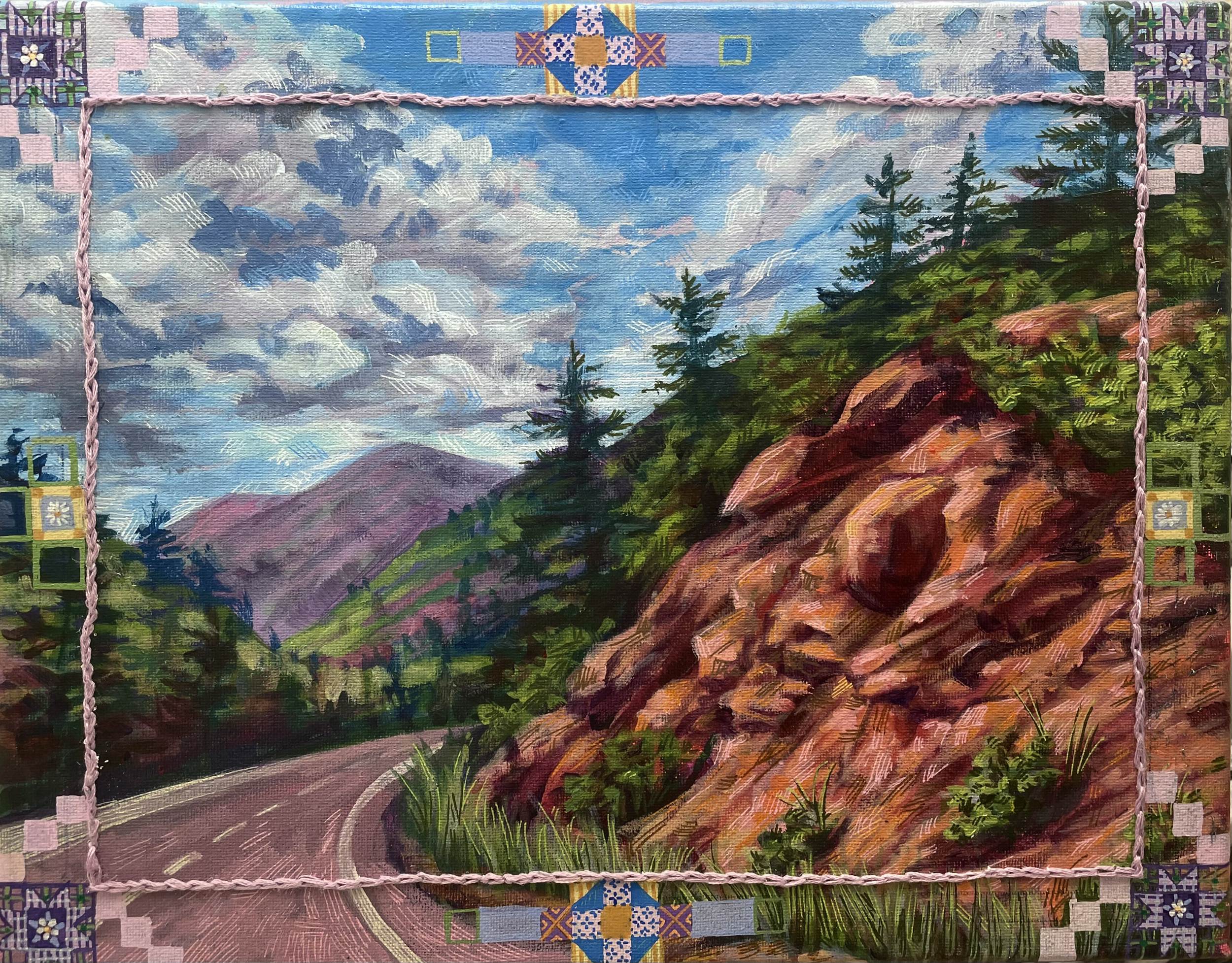
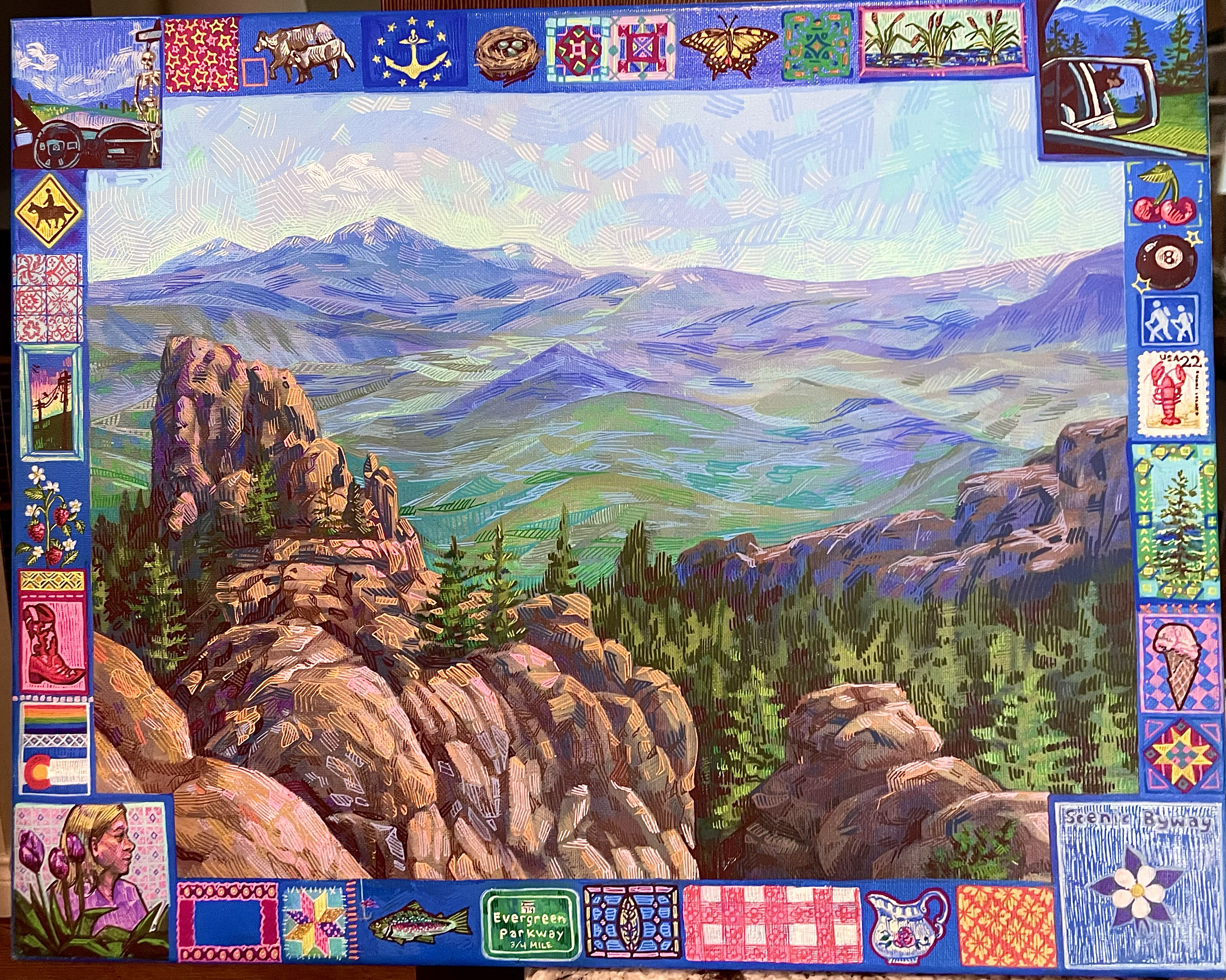
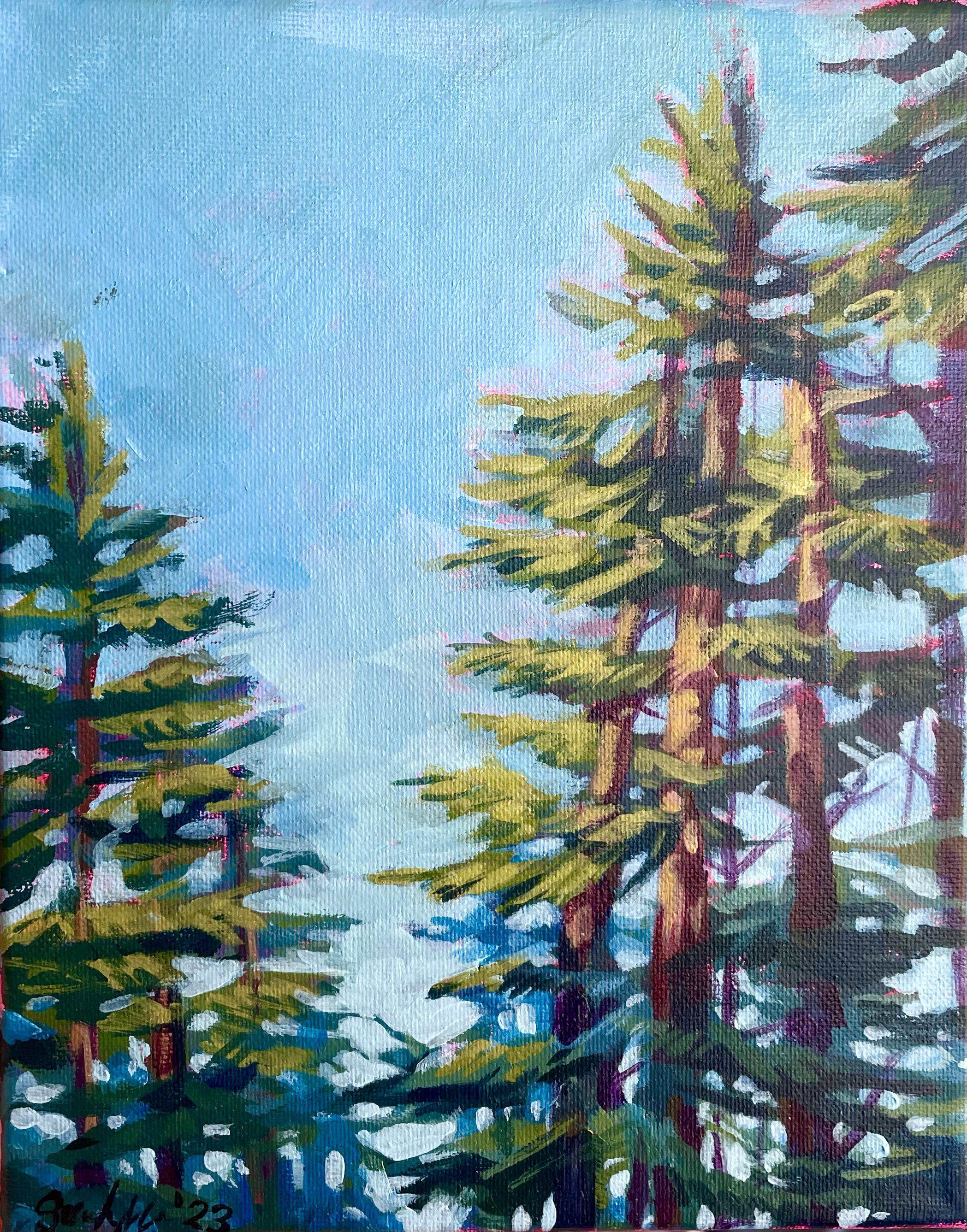
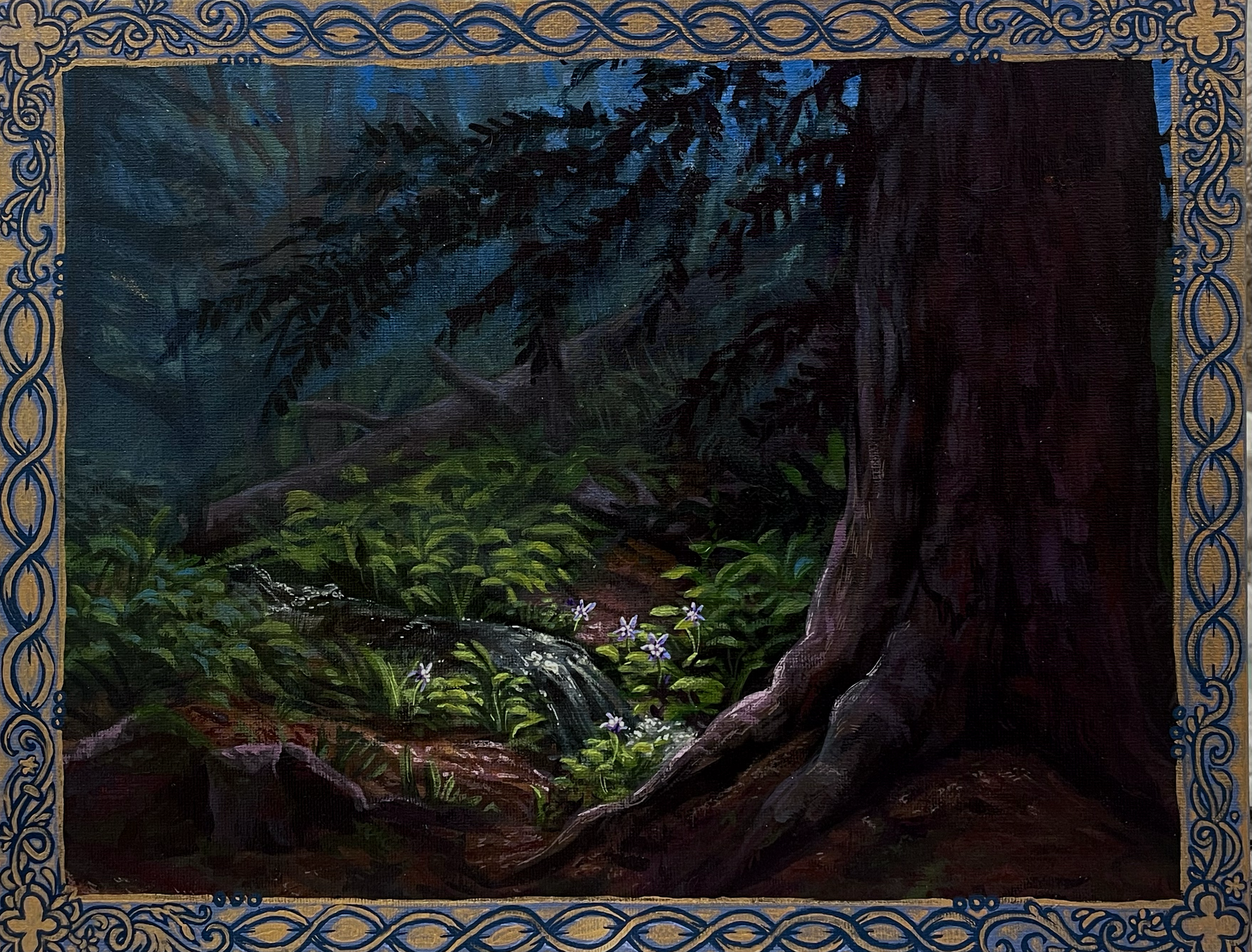
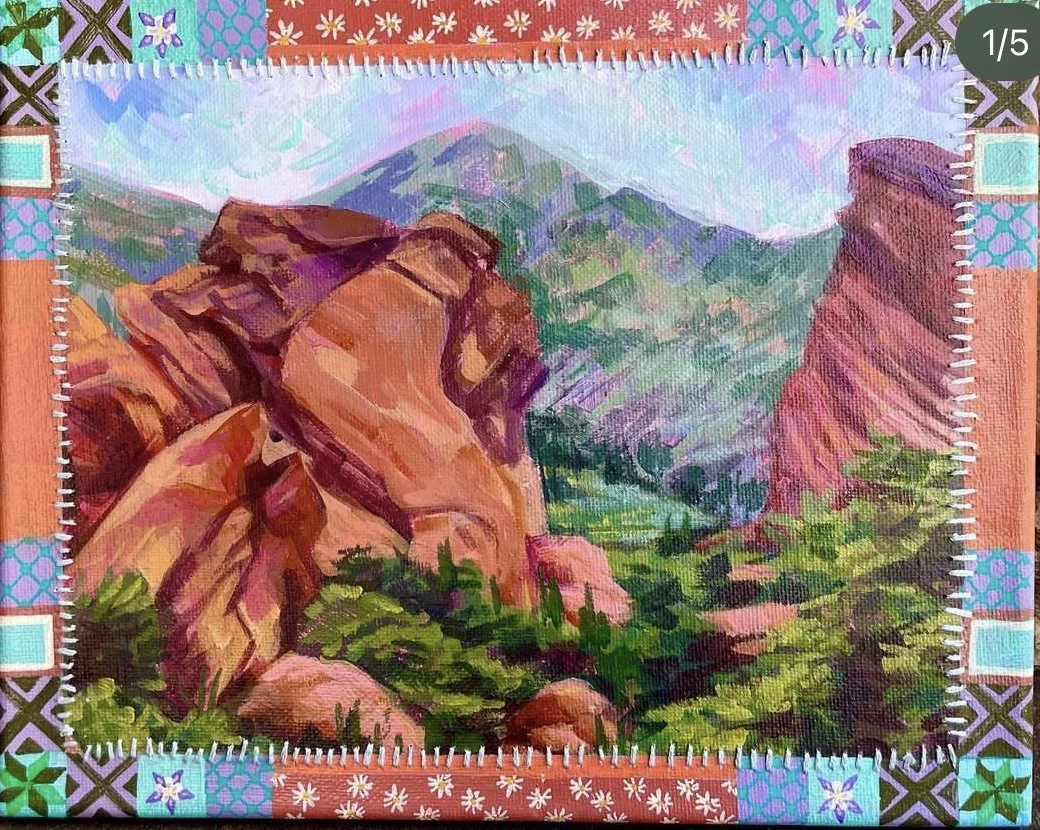
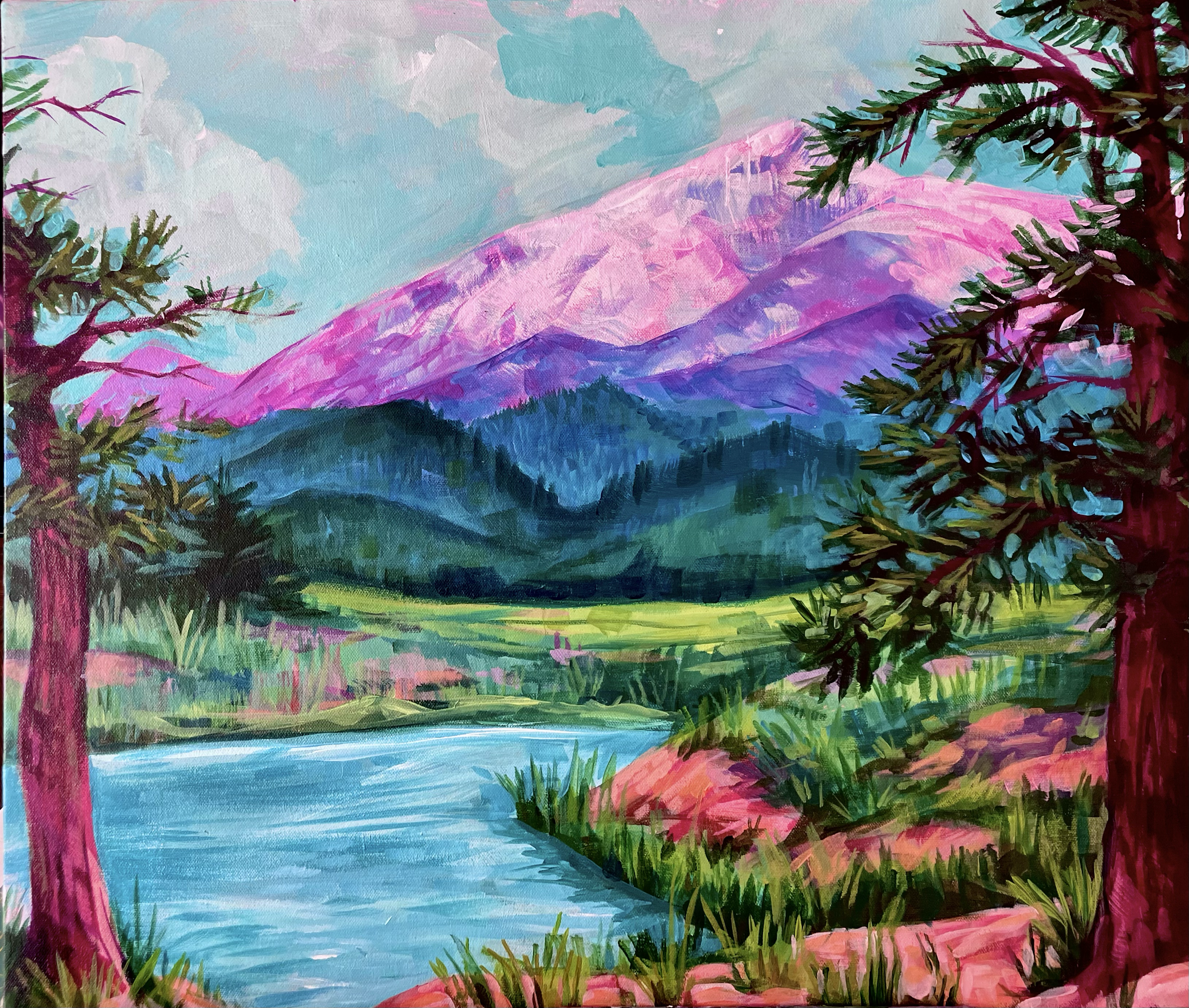
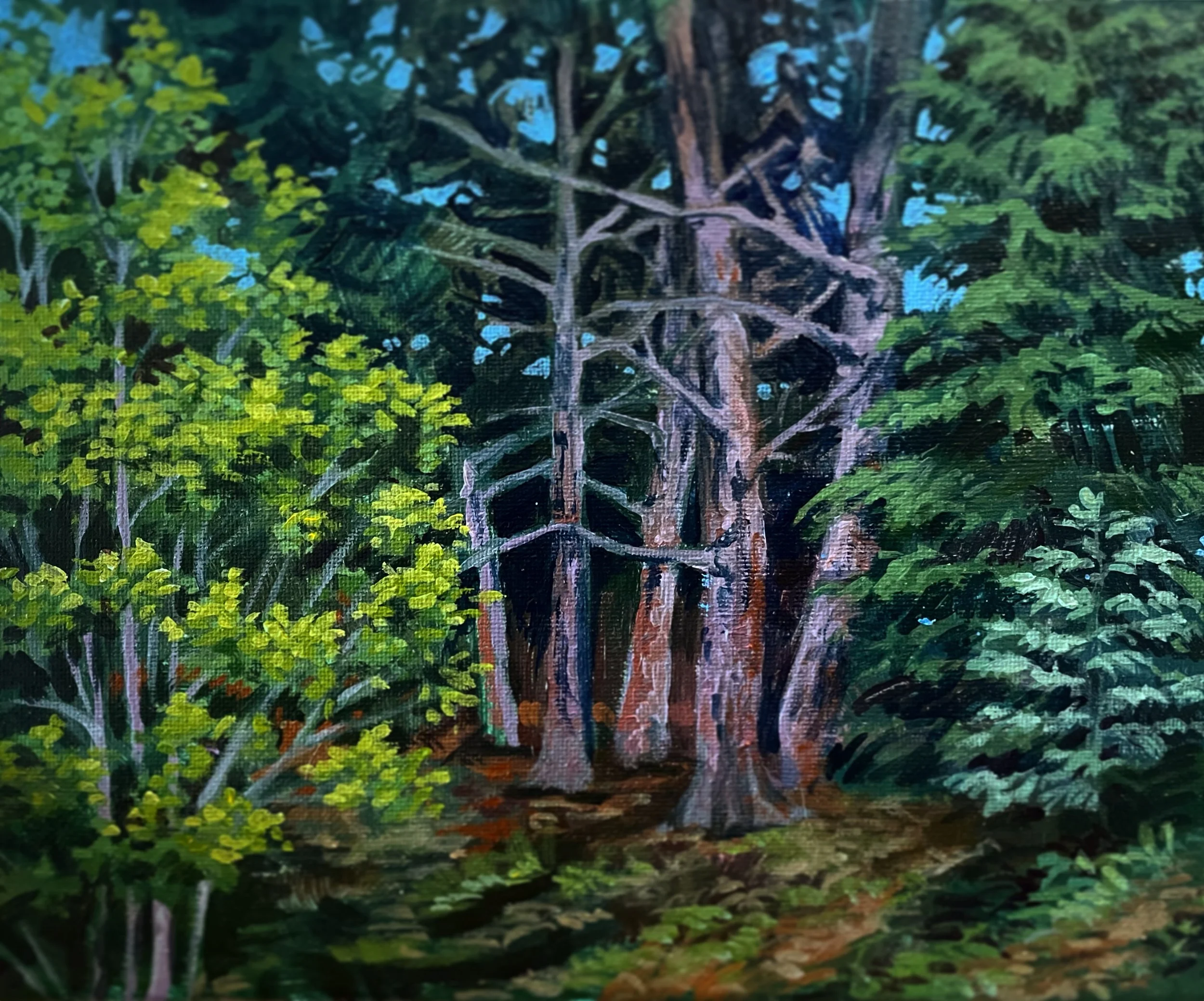
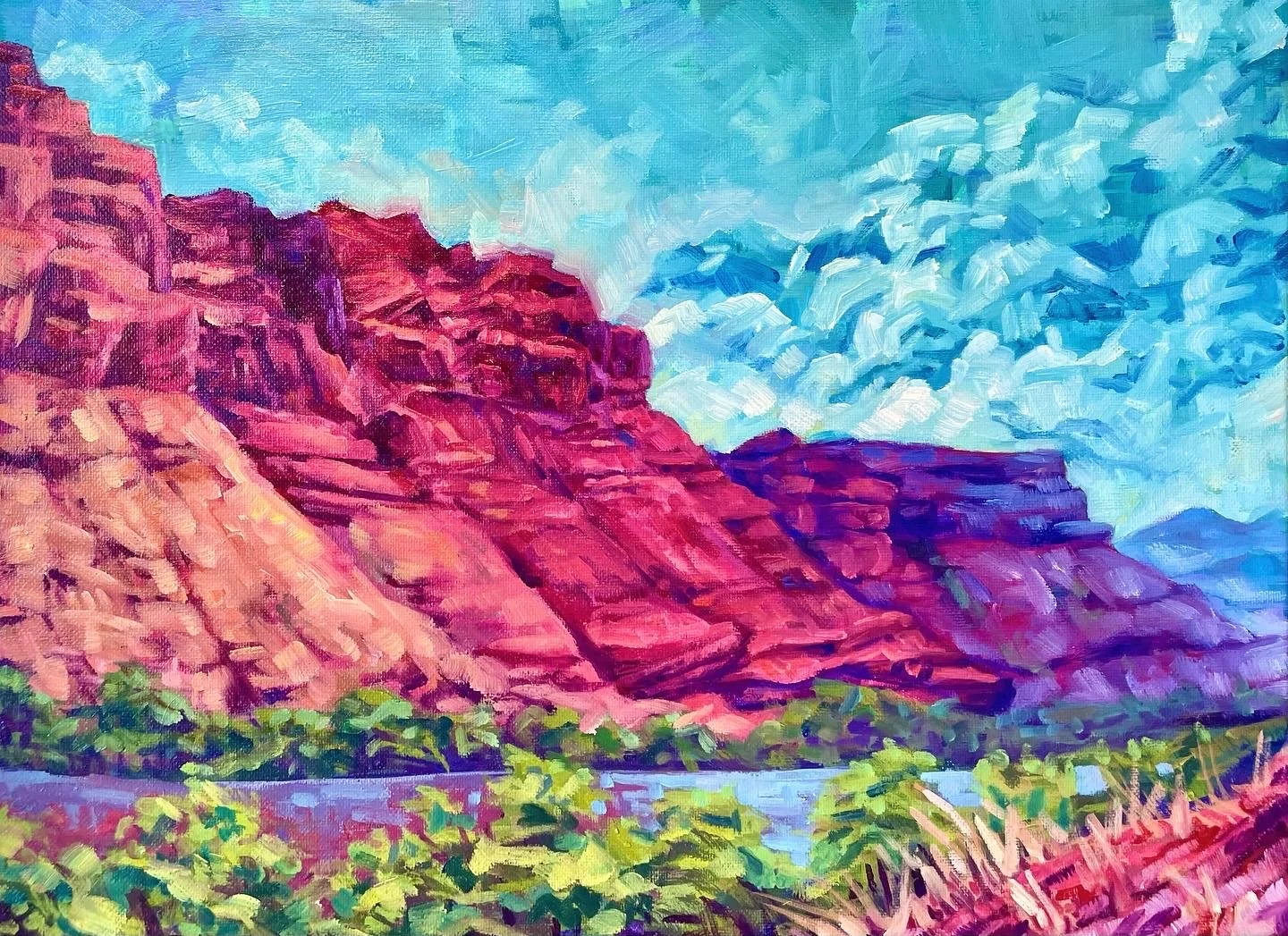
Columbine Quilts explores memory, home, and the relationship between humans and the natural world through a layered visual language of landscape, textile, and spiritual symbolism. Influenced by Colorado’s ecology, textiles, and psychedelic patterns, the work blends stained glass aesthetics, meditative pattern-making, and personal imagery. Through this process-driven approach, the paintings become both a reflection of place and a record of attention, inviting viewers into a deeper sense of connection and wonder.
Columbine Quilts
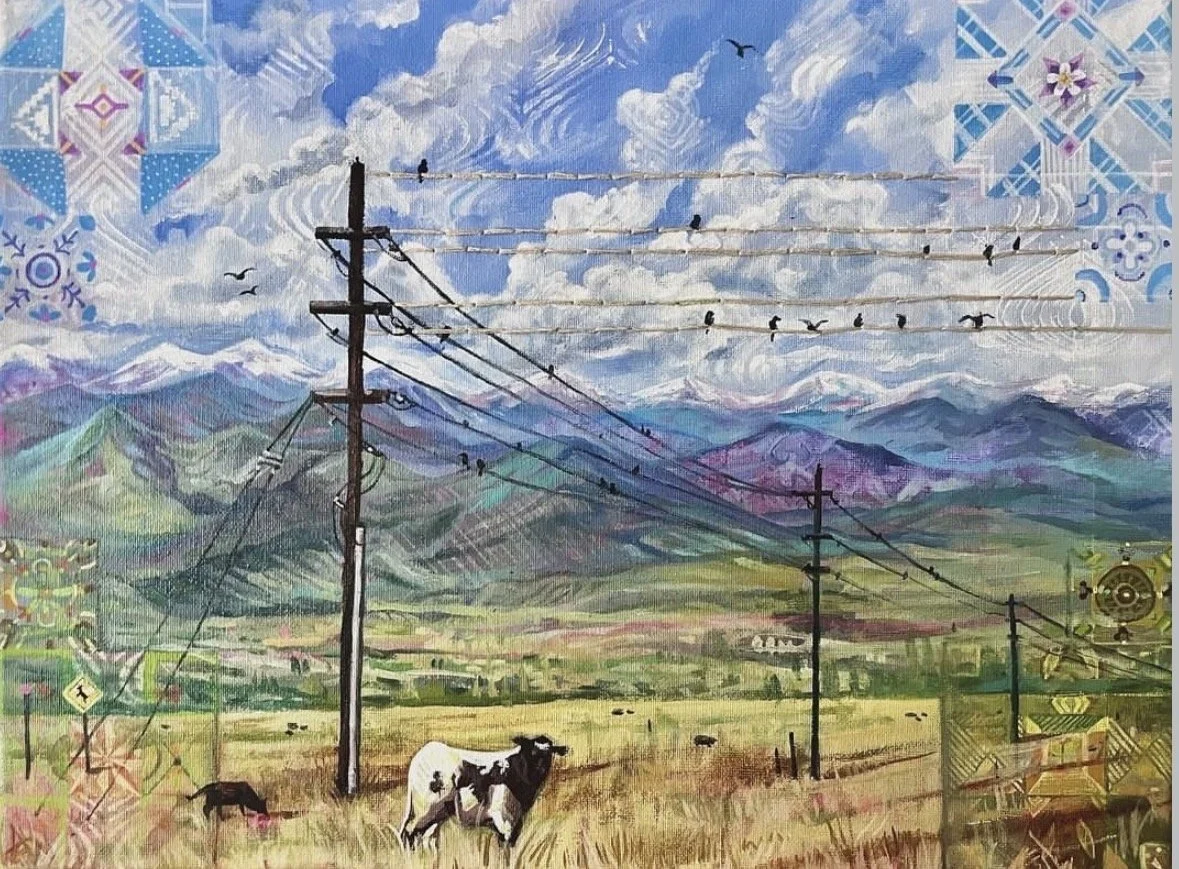
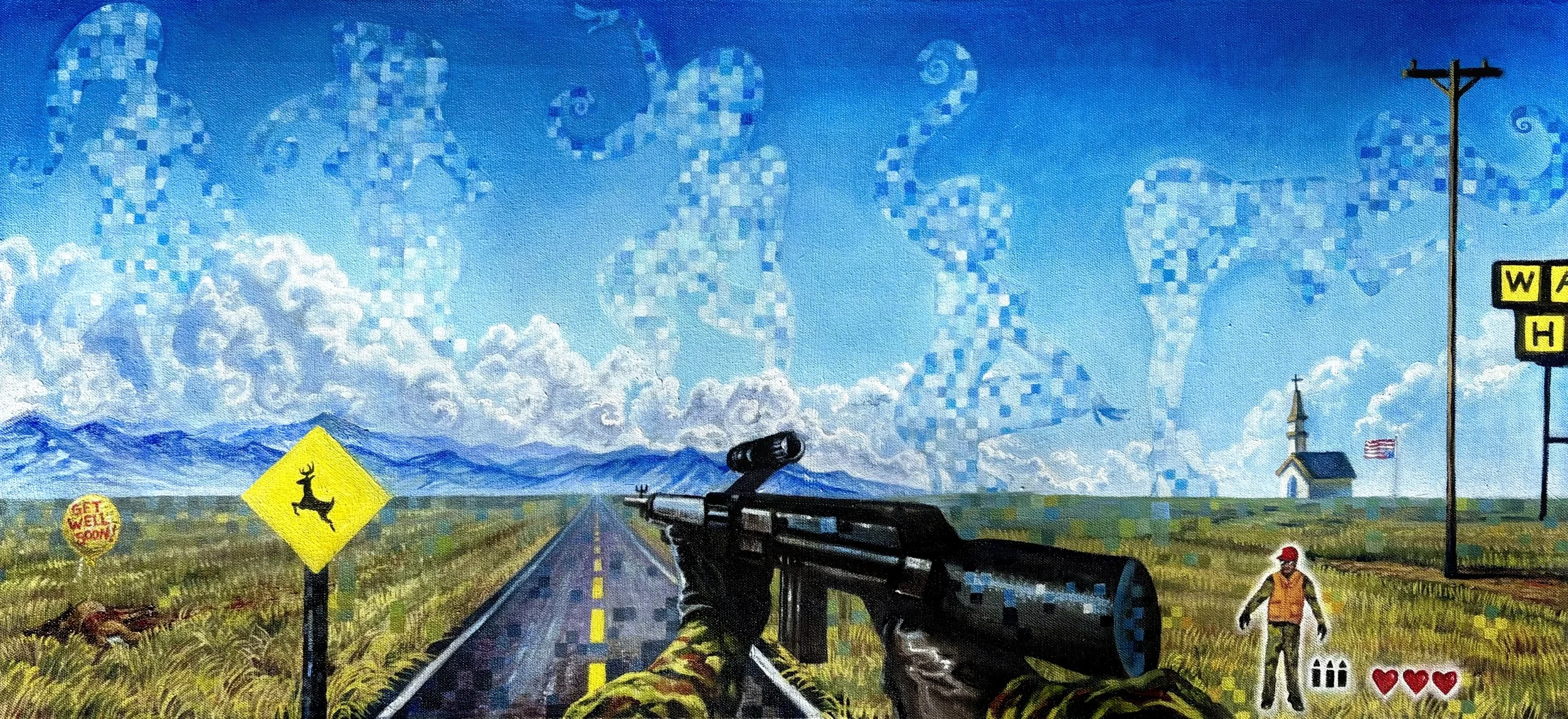
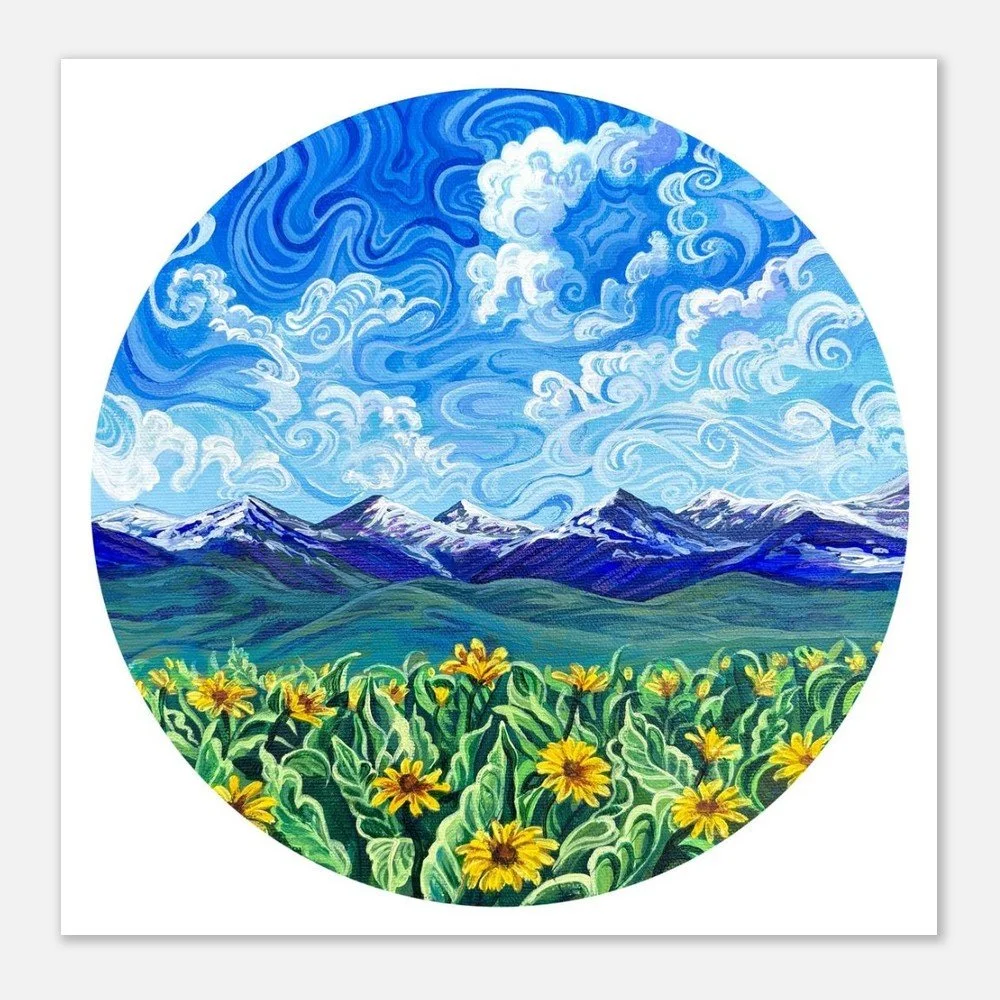
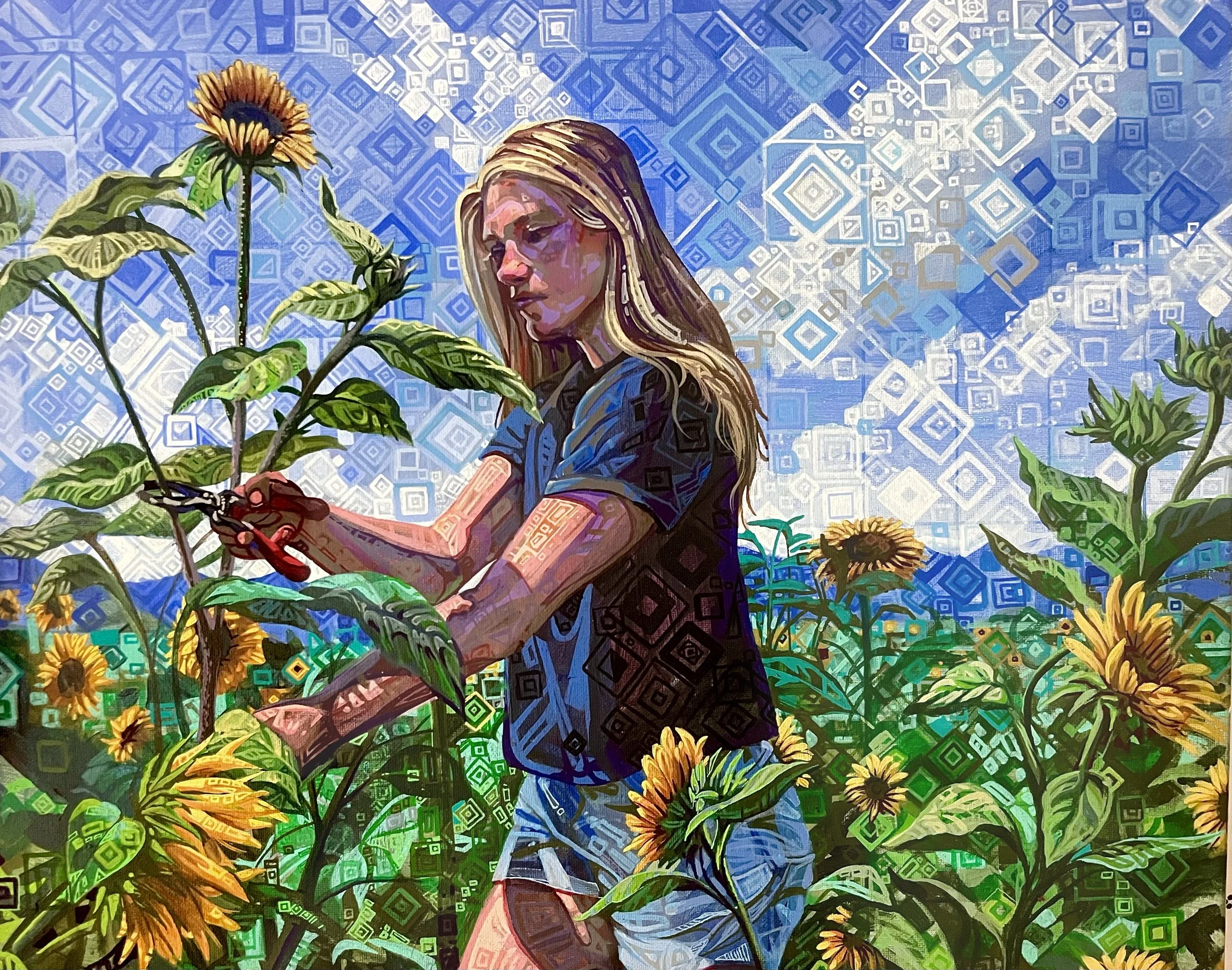
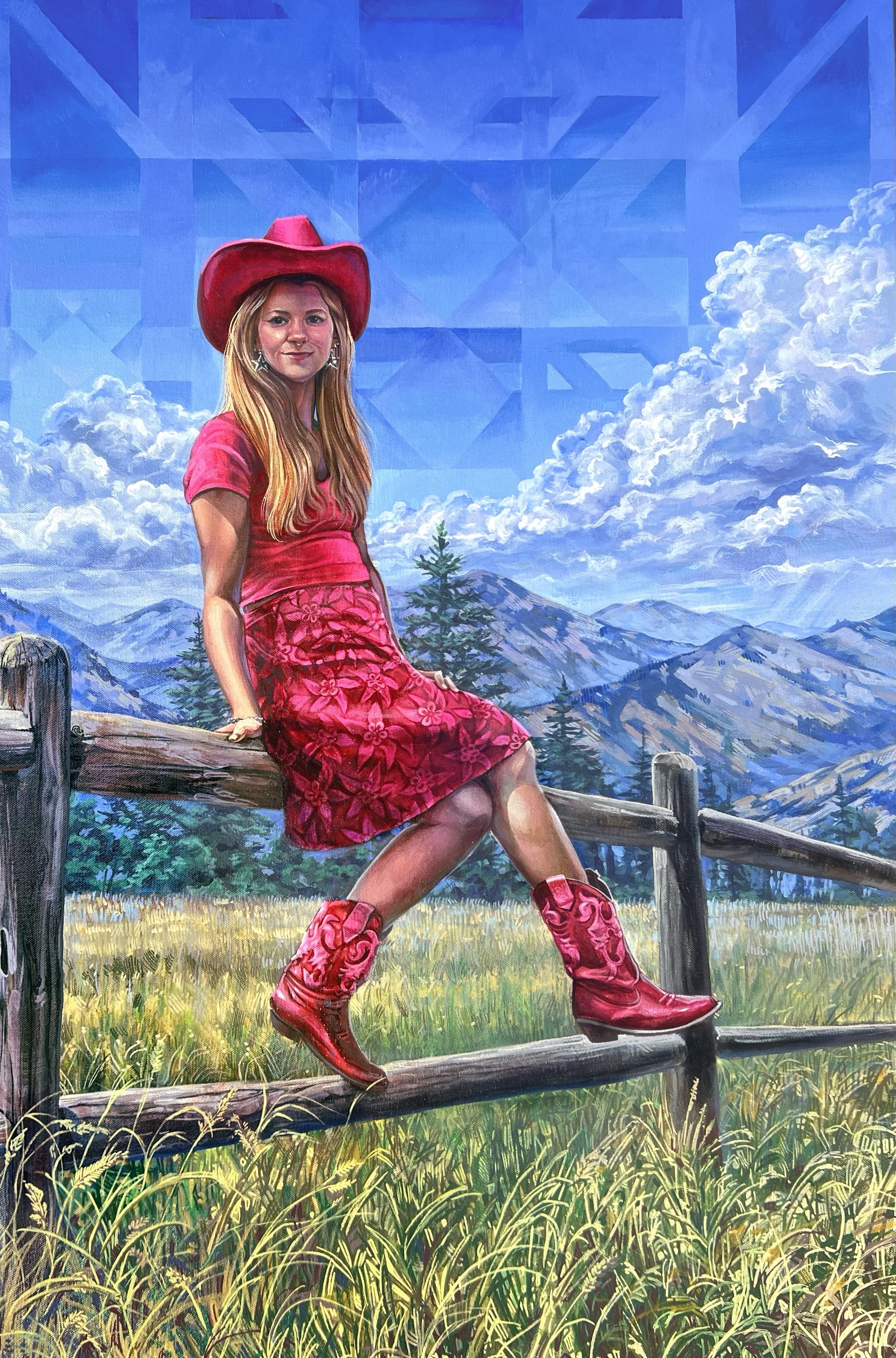
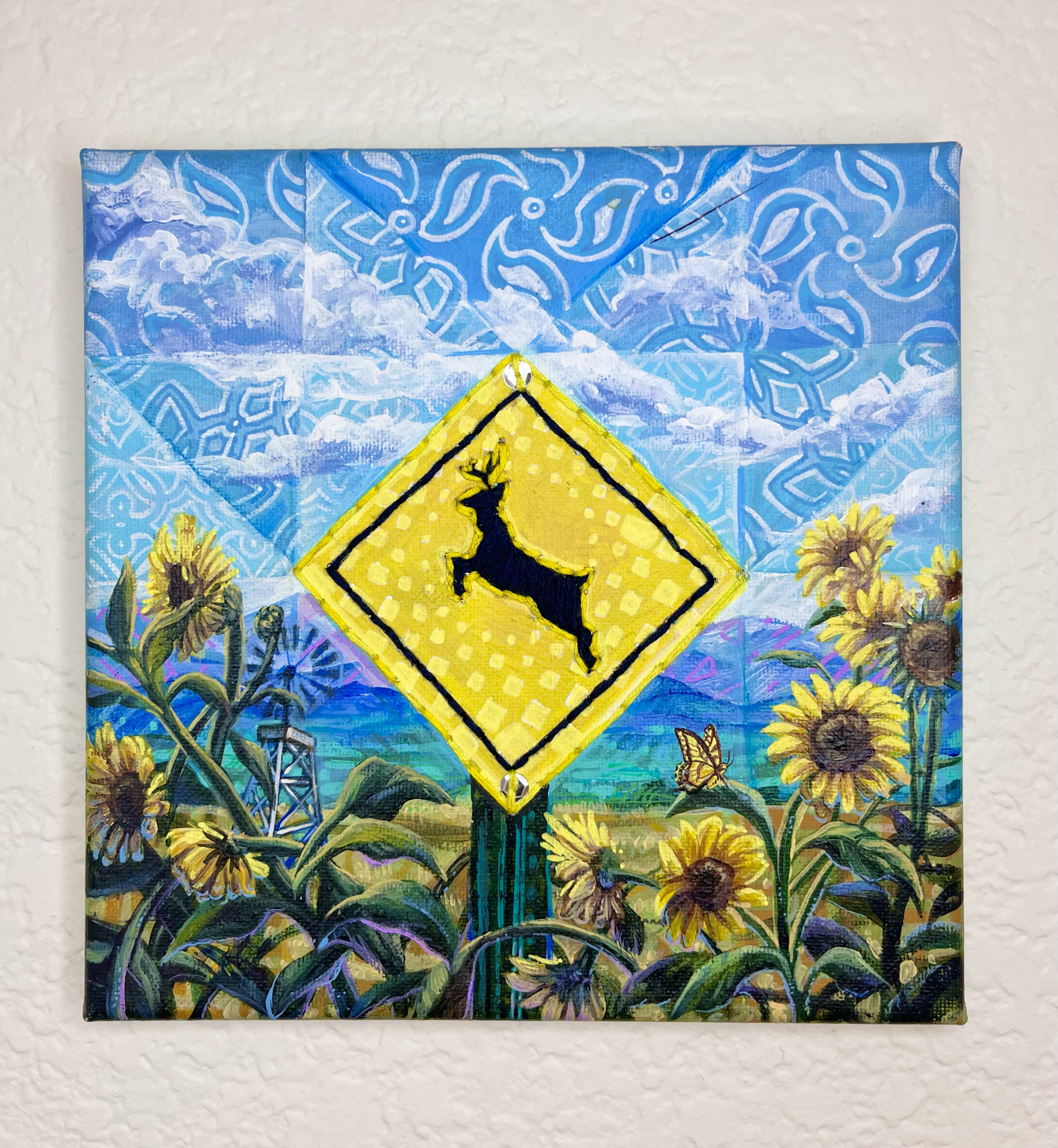
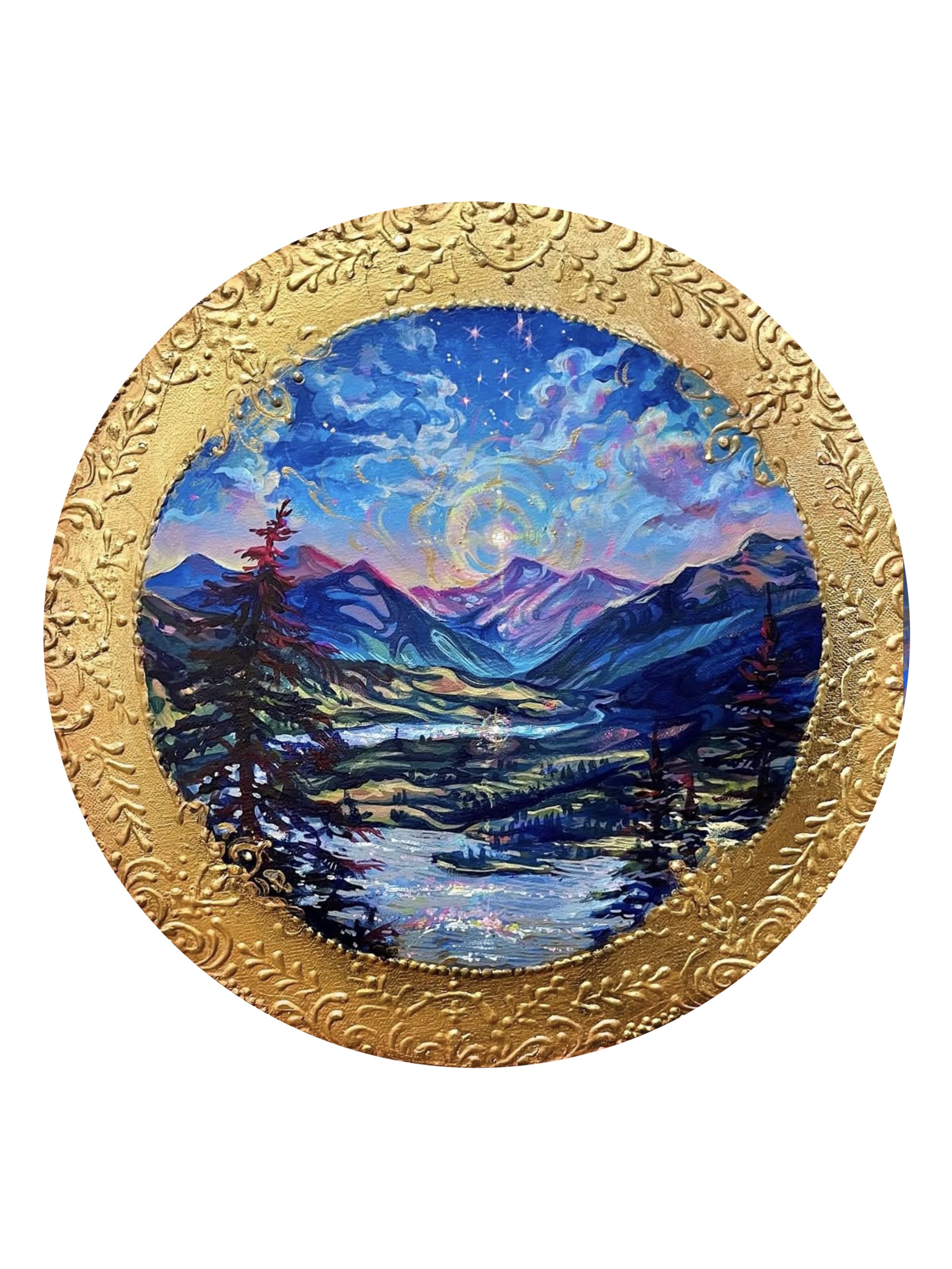
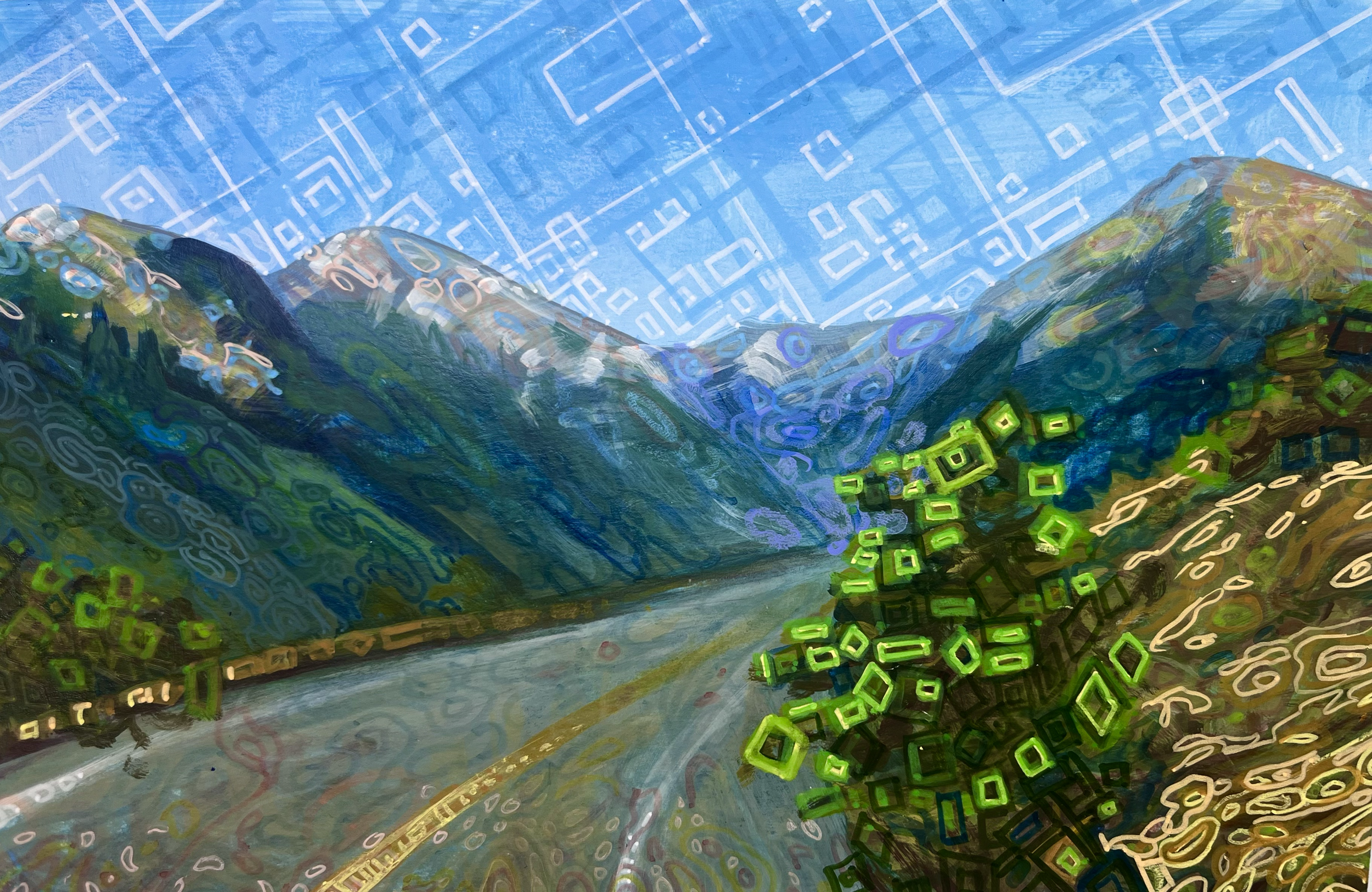
Home, Memory, Land
“Columbine Quilts” is a body of work exploring memory, nature, and homecoming. I grew up in Colorado, and for most of my childhood I dreamed of leaving. Maybe it was because both of my parents had moved so often, or because I was drawn to the idea of the big city or the ocean, somewhere new where I could reinvent myself. Desperate to go out of state for college, I was accepted to the prestigious Rhode Island School of Design, I left without hesitation, imagining a life closer to the coast, somewhere fresh where I might finally fit in.
But distance made the heart grow fonder. At RISD, immersed in the intensity of the EFS program, every orifice somehow dusted with charcoal, I found myself constantly yearning for Colorado. The absence of mountains, the sudden removal of a character on the horizon I had taken for granted, felt disorienting. While I pushed through long nights working in charcoal, cardboard, and digital modeling on Rhino, I craved a return to painting and to color. I wanted to rediscover something intuitive, something that felt like mine.
That return began in the same place it started: outside. As a child, I learned to paint on camping trips with my dad, who encouraged my creativity from the beginning. He was never a jock and was desperate to raise an artist. He taught me watercolor techniques before I could fully understand them, guiding me through concepts like atmospheric perspective and local color while we sat in the woods. Those early experiences shaped not only my skills but also my relationship to nature. Painting was never separate from the environment; it was a way of paying attention to it and showing it care.
When I returned to Colorado during the summer, I brought my paints with me again. At first, it felt unfamiliar. I struggled with composition, hierarchy, and spatial clarity. But over time, through repetition and experimentation, the process became more fluid. I began to think beyond pure representation, developing motifs and a style that could hold the work together emotionally as well as visually.
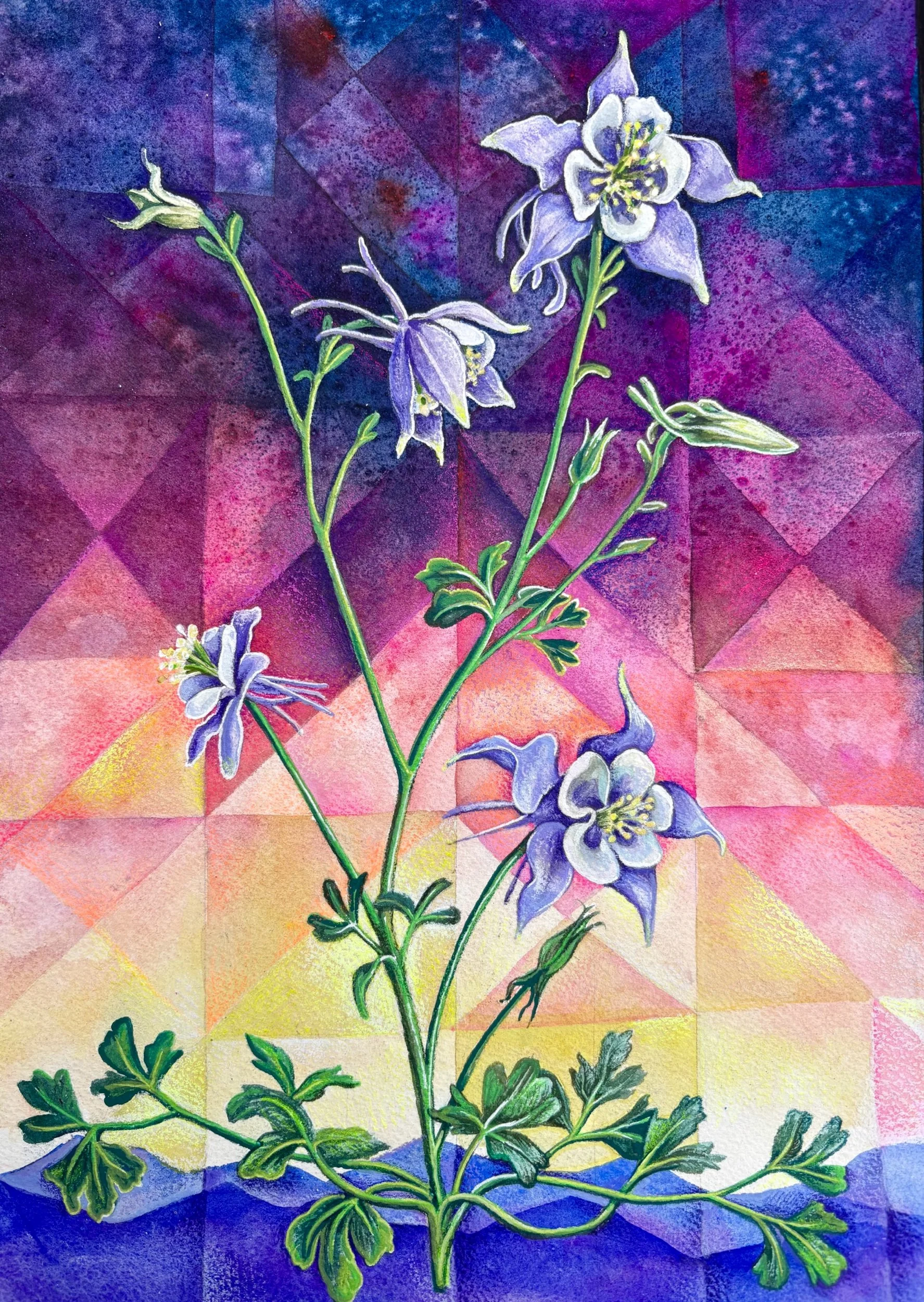
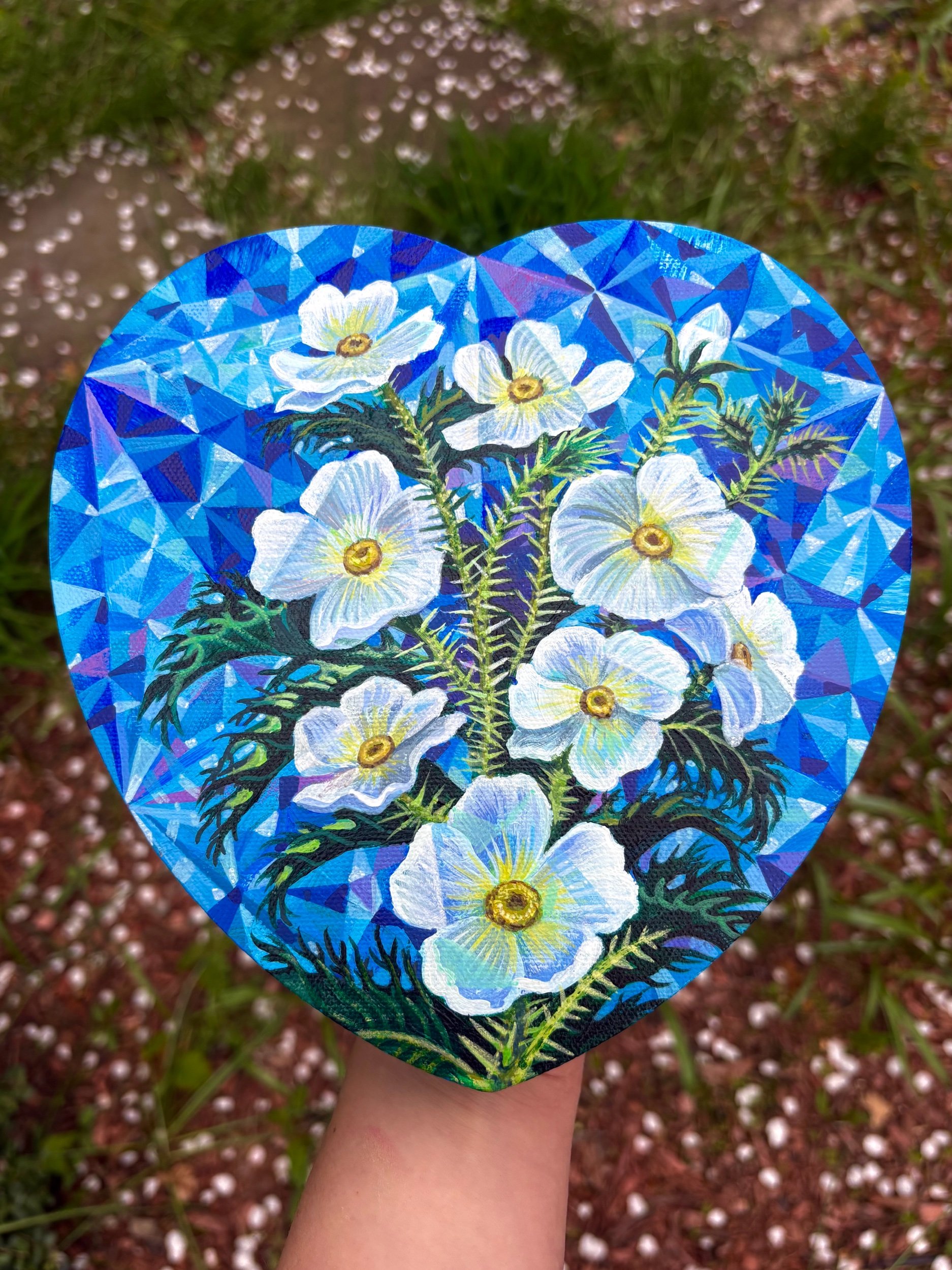
This is where the idea of the quilt emerged. I have always been drawn to patterns, repetition, and alliteration, so the columbine, Colorado’s state flower, became a natural symbol. The title Columbine Quilts reflects both a visual and conceptual framework. Initially, the quilt appeared literally in the work through stitched patterns, embroidery-like marks, and structured compositions. Over time, it evolved into a metaphor. A quilt is an act of assembly. It is made from fragments, from memory, from touch. It is a form of storytelling often passed through generations of women in my family, through quilting and scrapbooking. It holds intimacy, care, and personal history.
At this point in my practice, I became increasingly interested in spirituality within art. I was raised atheist, but after taking a class on world religions, I became fascinated by the intersection between art and belief. I began reading texts such as The Artist’s Way, the Tao Te Ching, Eat Pray Love somewhat ironically, and Mindfulness in Plain English. Although I don’t identify as spiritual, I found myself deeply drawn to the ideas within them. I began to recognize a sense of wonder and reverence in my own relationship to the natural world and its processes. I find beauty in the randomness of it all.
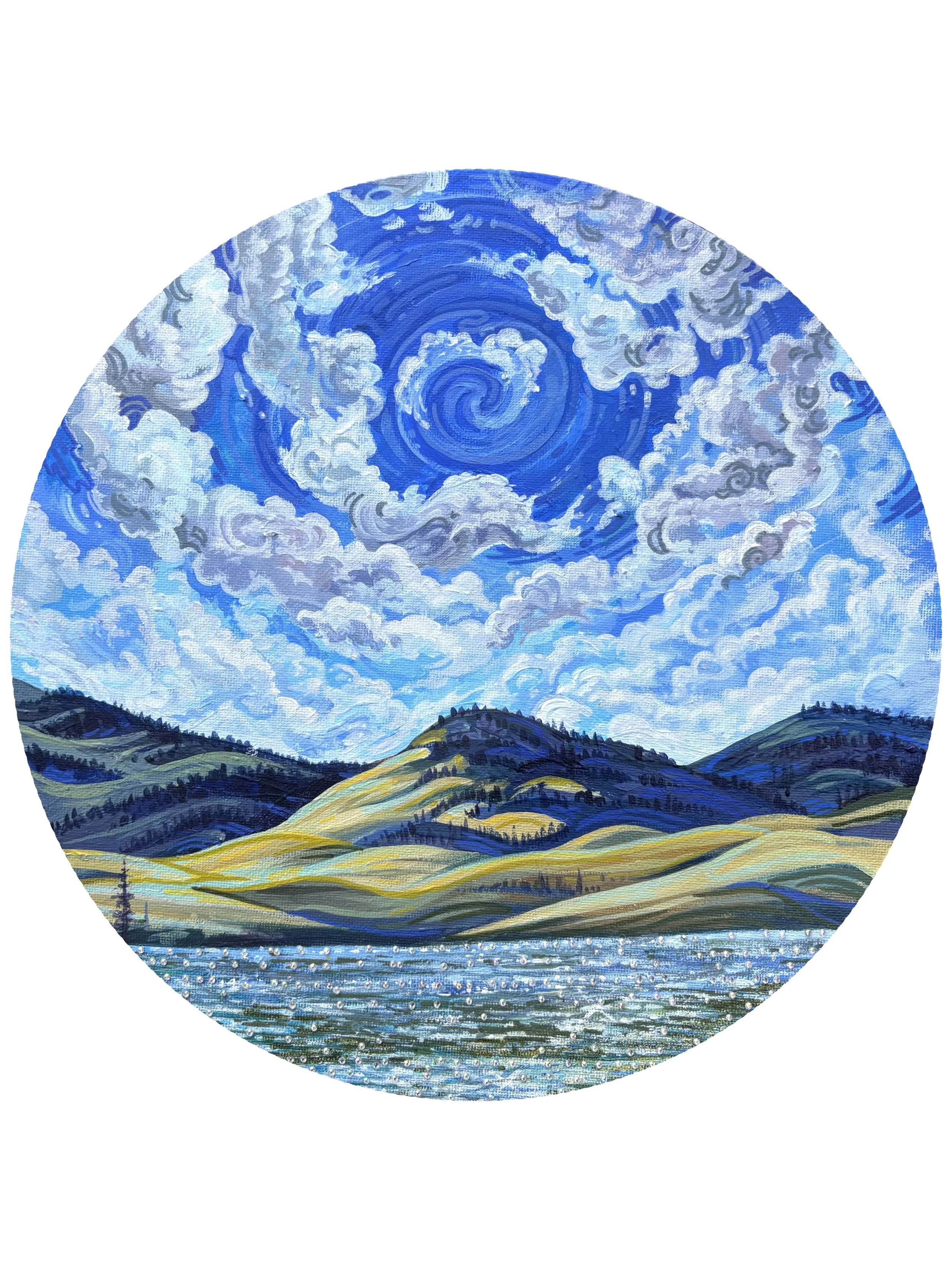
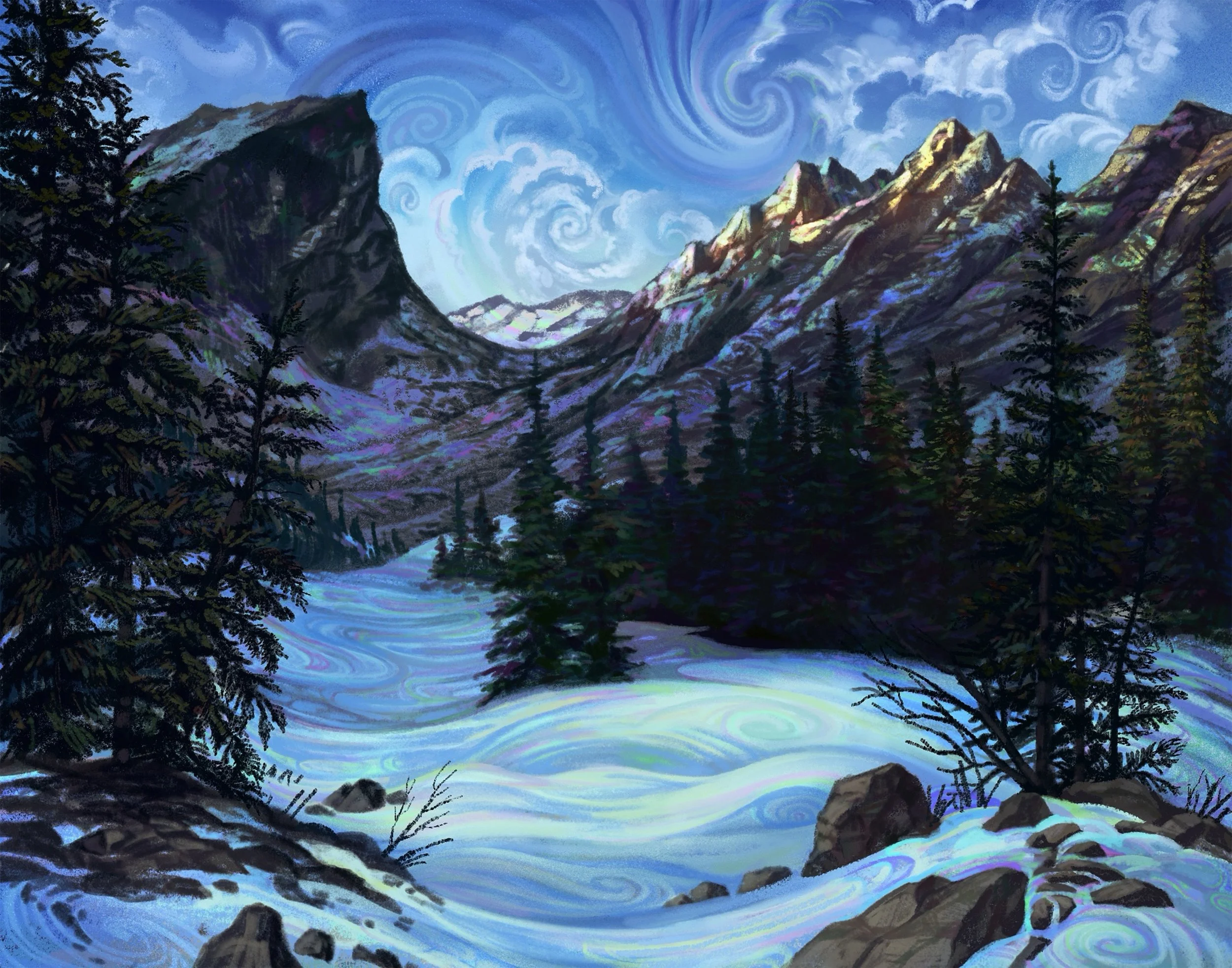
Studying abroad in Florence, along with my Catholic family background, deepened this interest. I have always been moved by the way devotion is expressed through art, especially in stained glass and religious ornamentation. I began incorporating these visual languages into my work through gilded framing and stained glass–inspired compositions. At the same time, my meditation practice led me back to something I had loved as a child: repetitive pattern-making, similar to Zentangle. I started layering, looping, evolving patterns across the surfaces of my landscapes, allowing them to interact with the slopes of hills and the movement of the terrain.
This shift also transformed my relationship to process. I had previously been focused almost entirely on the finished product, pushing through each piece with a sense of urgency. Through incorporating meditation into my practice, I began to slow down and genuinely enjoy painting. The work became more dynamic, unfolding as a conversation rather than a task. Instead of controlling every outcome, I allowed the piece to guide me, revealing what it needed over time.
Reading “Braiding Sweetgrass” by Robin Wall Kimmerer further transformed my perspective. The book articulates an Indigenous philosophy centered on reciprocity with the natural world, challenging the idea that humans exist apart from or above it. It reframes nature as a network of relationships rather than a resource. This thinking deeply influenced my work, especially in how I approach the intersection of femininity, ecology, and power.
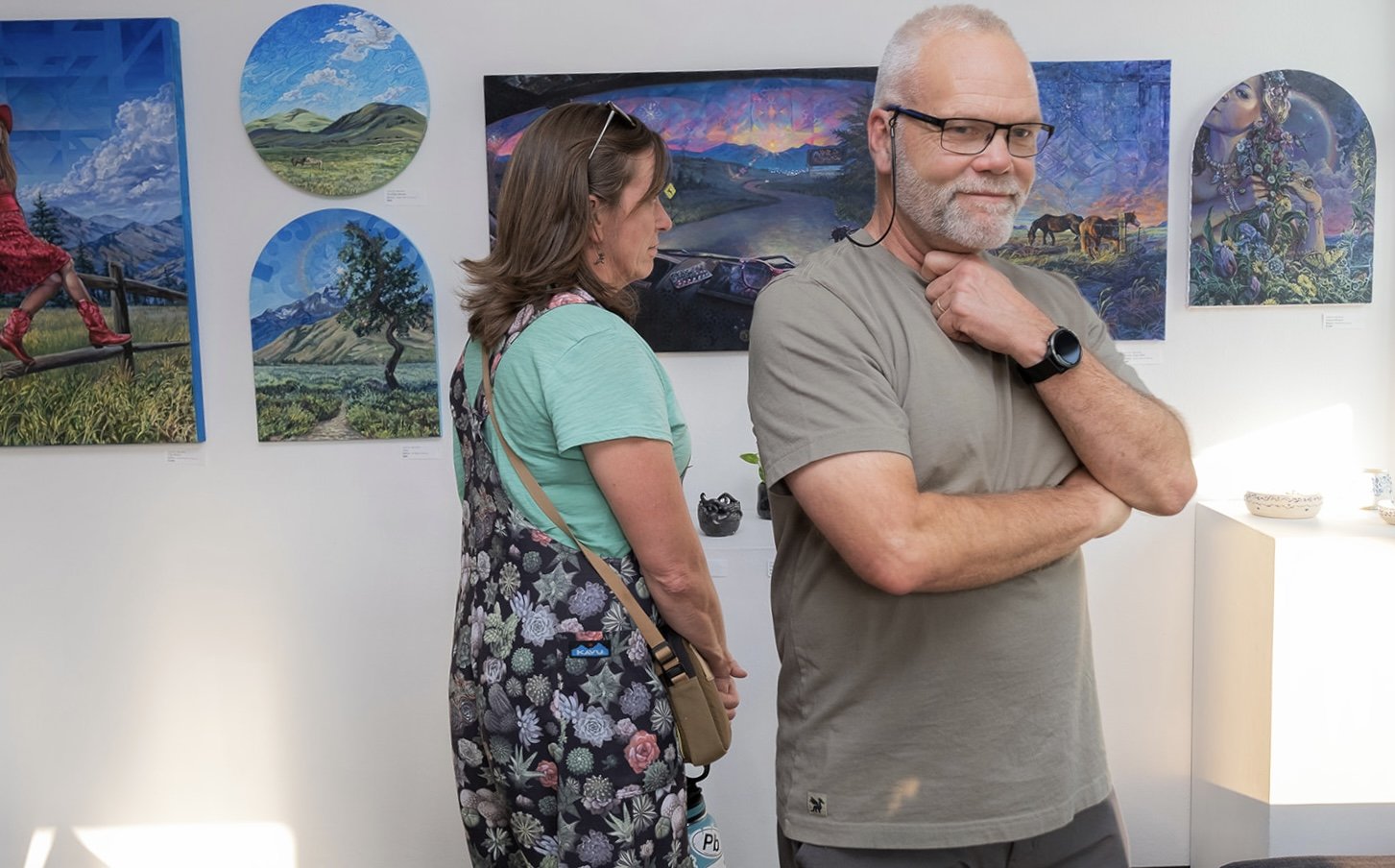
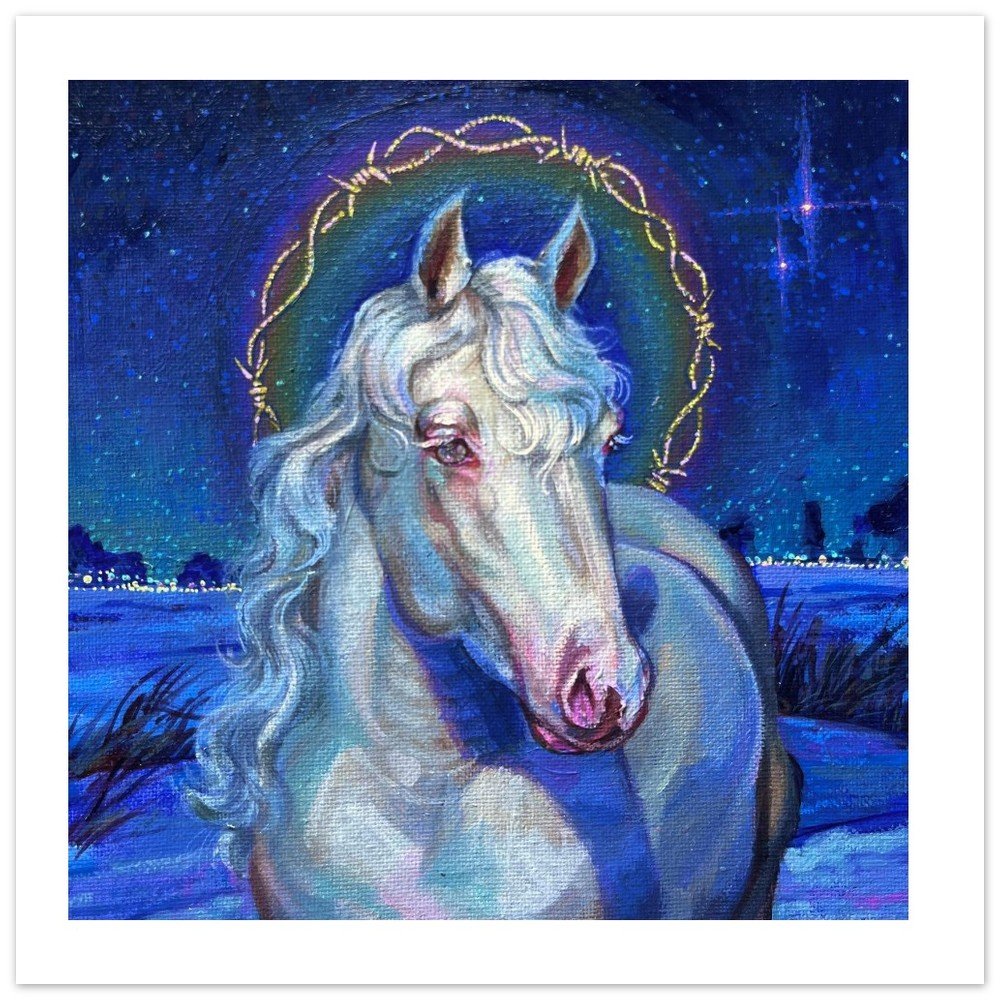
In my landscapes, I intentionally include elements of human intervention: power lines, highways, barbed wire, and city lights. These elements serve both aesthetic and conceptual purposes. Visually, they create contrast and tension within the composition. Conceptually, they reflect the reality of Colorado as I know it, not just the idealized version often presented. Colorado carries a strong cultural identity and tourist mythology, but it is also shaped by development, industry, and contradiction. I am interested in what is overlooked, what exists alongside natural beauty but is rarely centered.
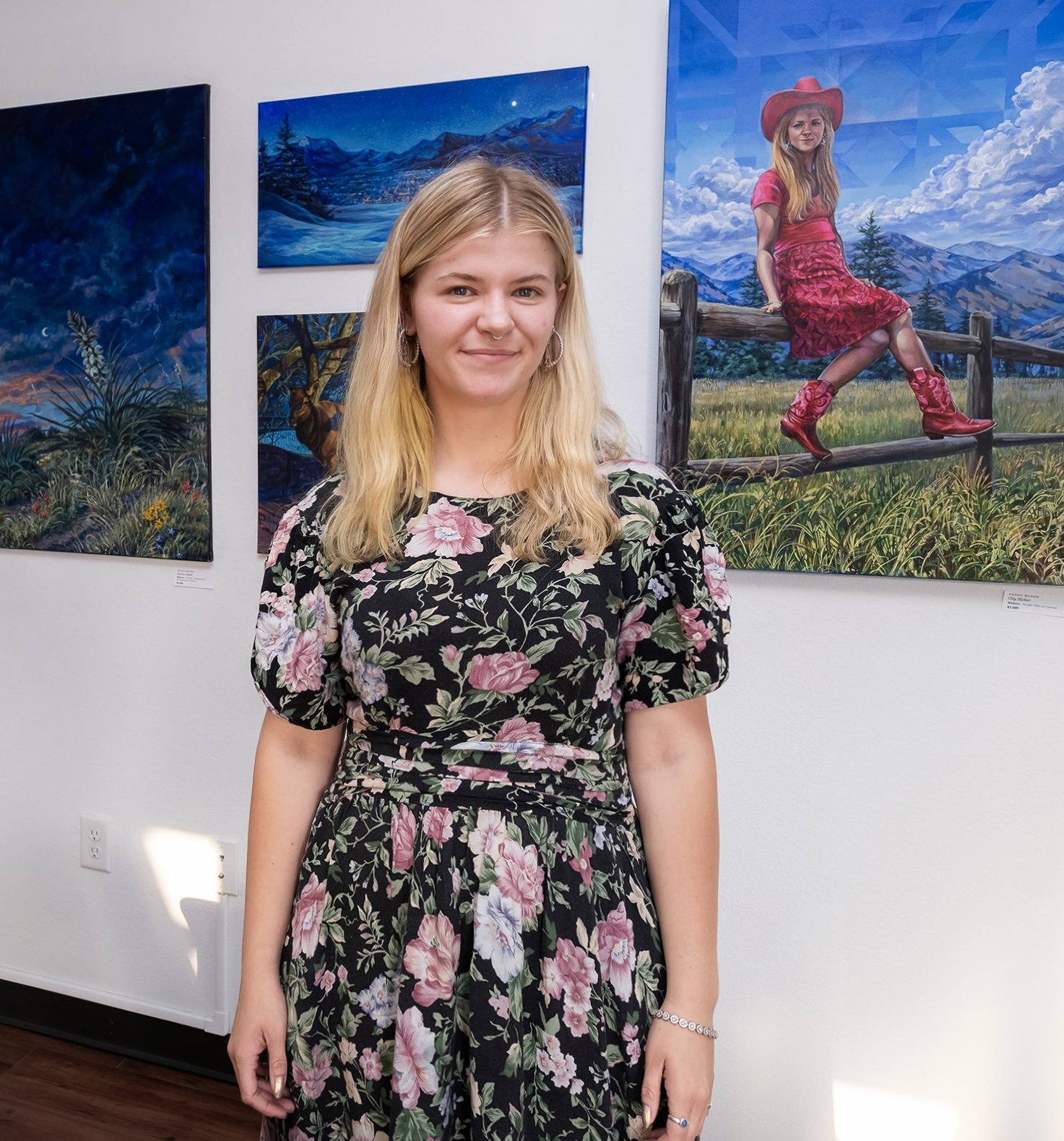
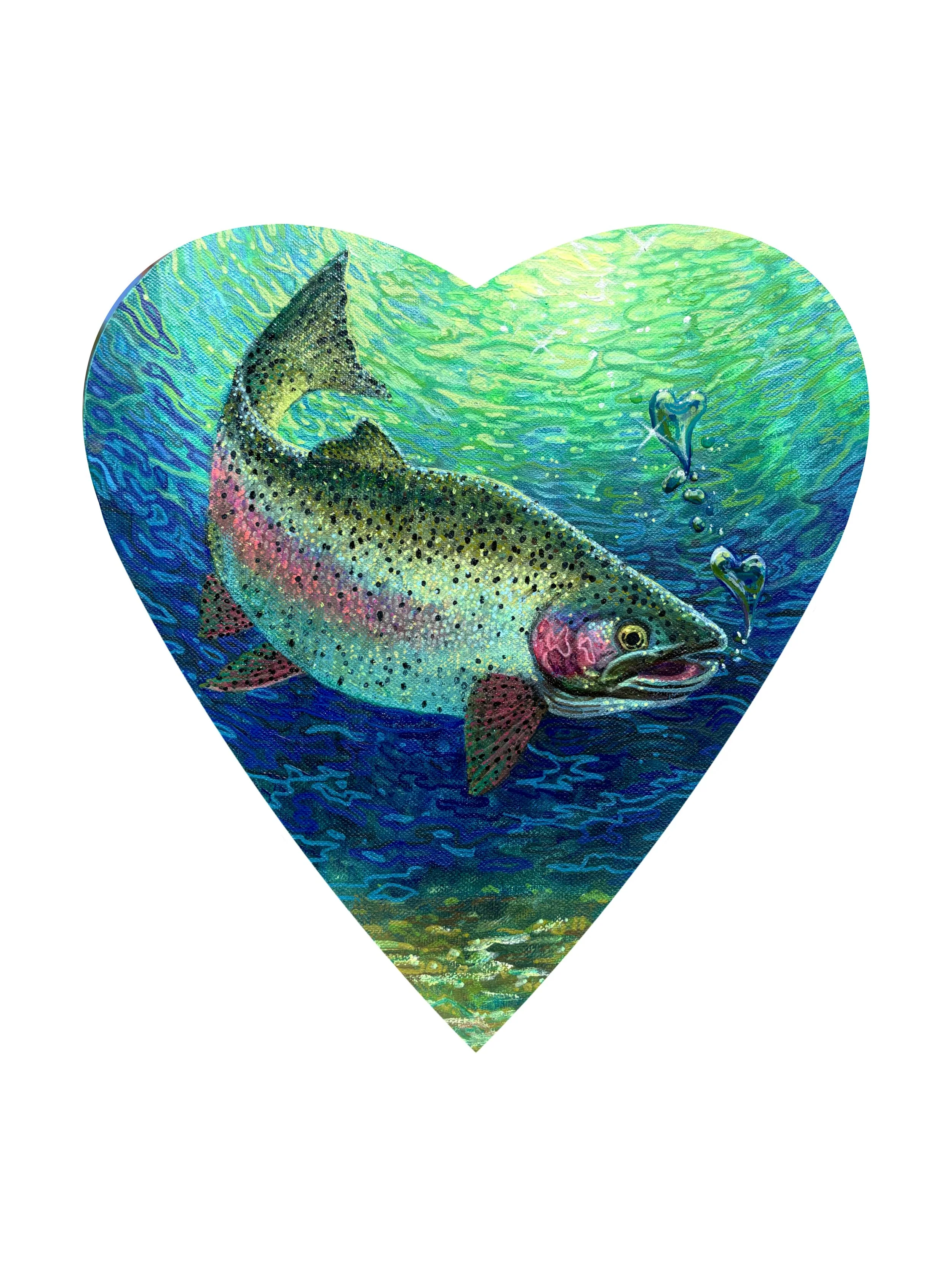
My work is deeply personal. I do not aim to replicate the landscape exactly, but to translate my relationship to it. I draw from photographs, memory, and direct observation, working plein air when possible. Recurring imagery such as gemstones, wildflowers, horses, trout, and my friends, family and self become characters within this world. The through line is my relationship to what is being portrayed.
Ultimately, “Columbine Quilts” is about the Colorado I carry with me. It is a layered, contradictory, and deeply felt place, shaped by both physical experience and emotional memory. Through psychedelic patterns, textiles, and scientific illustration, I build a version of home that I can return to, even when I am far away. This body of work has taught me how to embrace experimentation, to let go of perfection, and to find joy in the act of making.
More than anything, it is an invitation. I hope it encourages others to look more closely at the environments they inhabit, to recognize the complexity within them, nurture their inner child, and to feel a deeper connection to the natural world.