
Envy: The Dark Side of Sisterhood
Envy explores the beauty, jealousy, intimacy, and heartbreak of female friendship. Using symbols of femininity like hair, nails, glitter, jewelry, and makeup, the series examines how women are taught to find power in beauty while simultaneously being encouraged to compete with one another. Rather than dismissing female conflict as petty or “catty,” Envy takes these relationships seriously, exploring how love, loyalty, admiration, resentment, and betrayal can exist all at once.
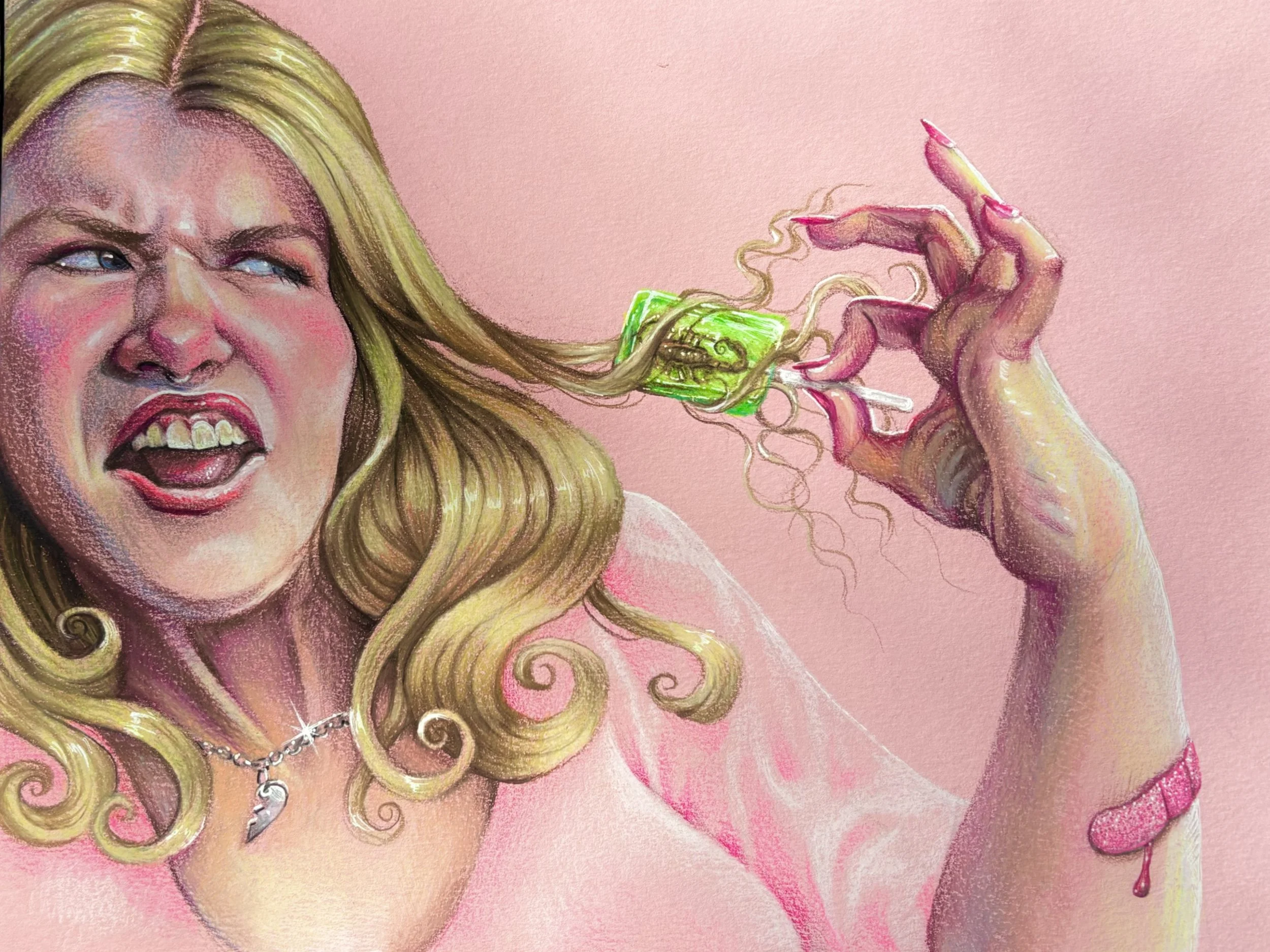
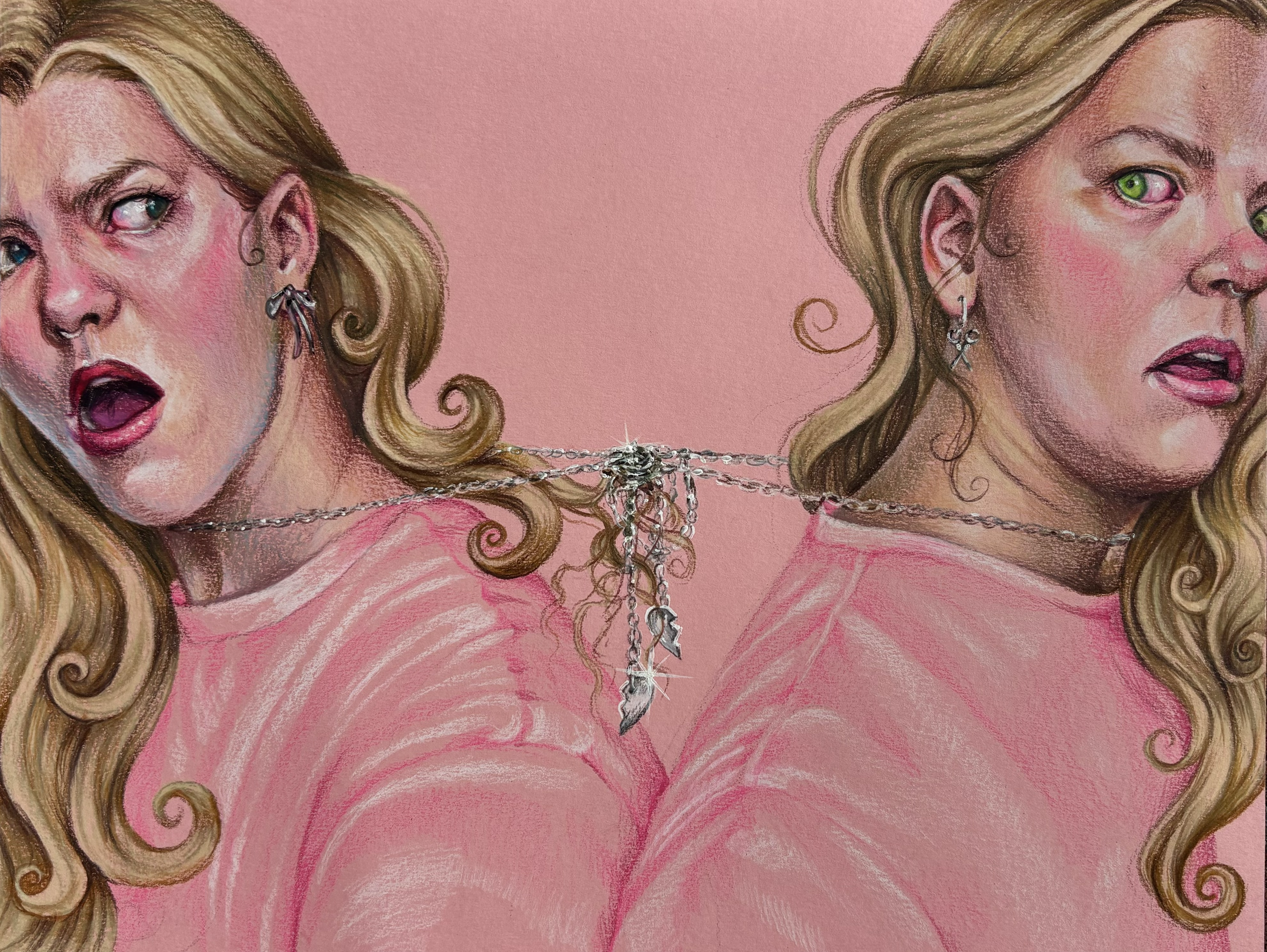
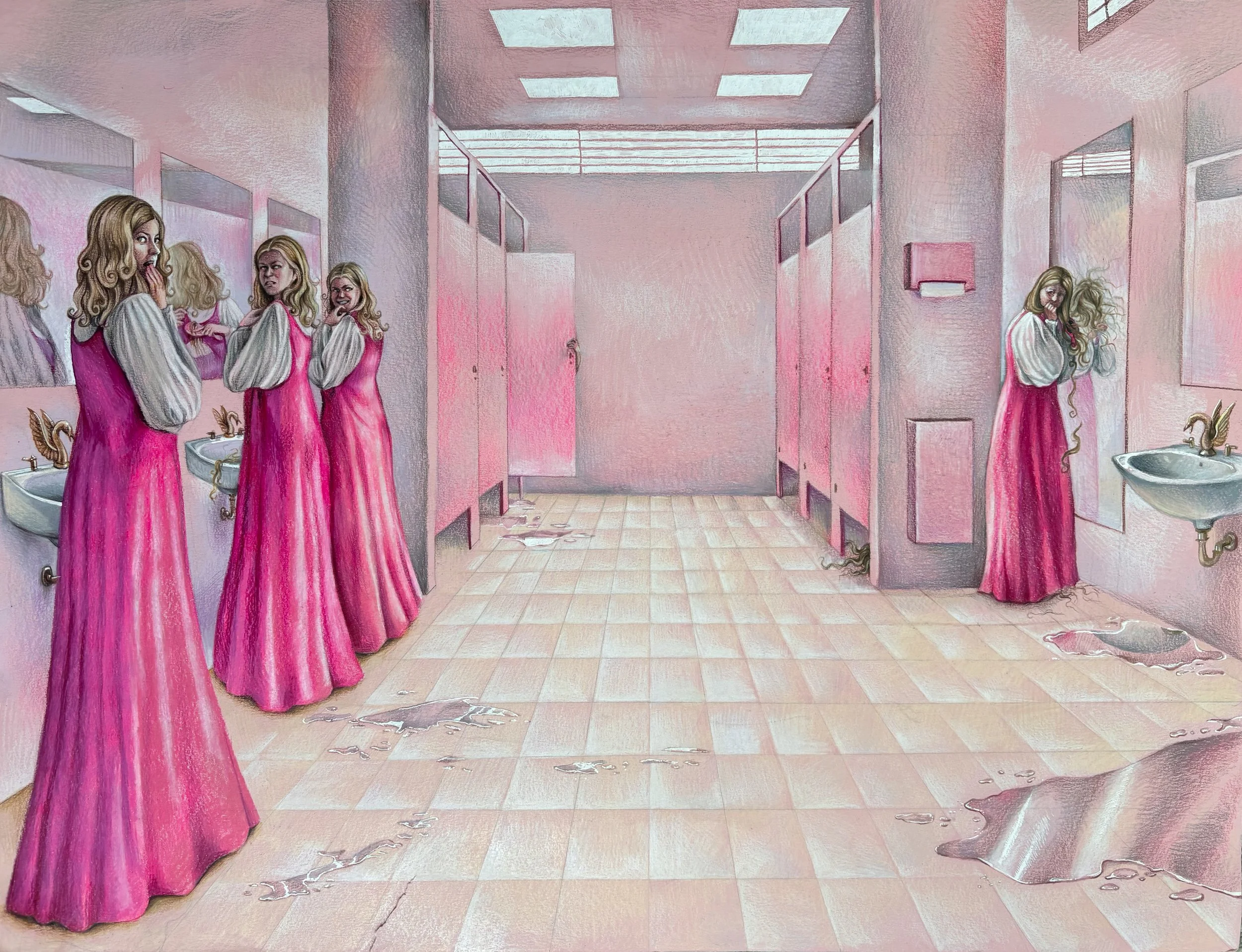
Envy, the deadliest sin…
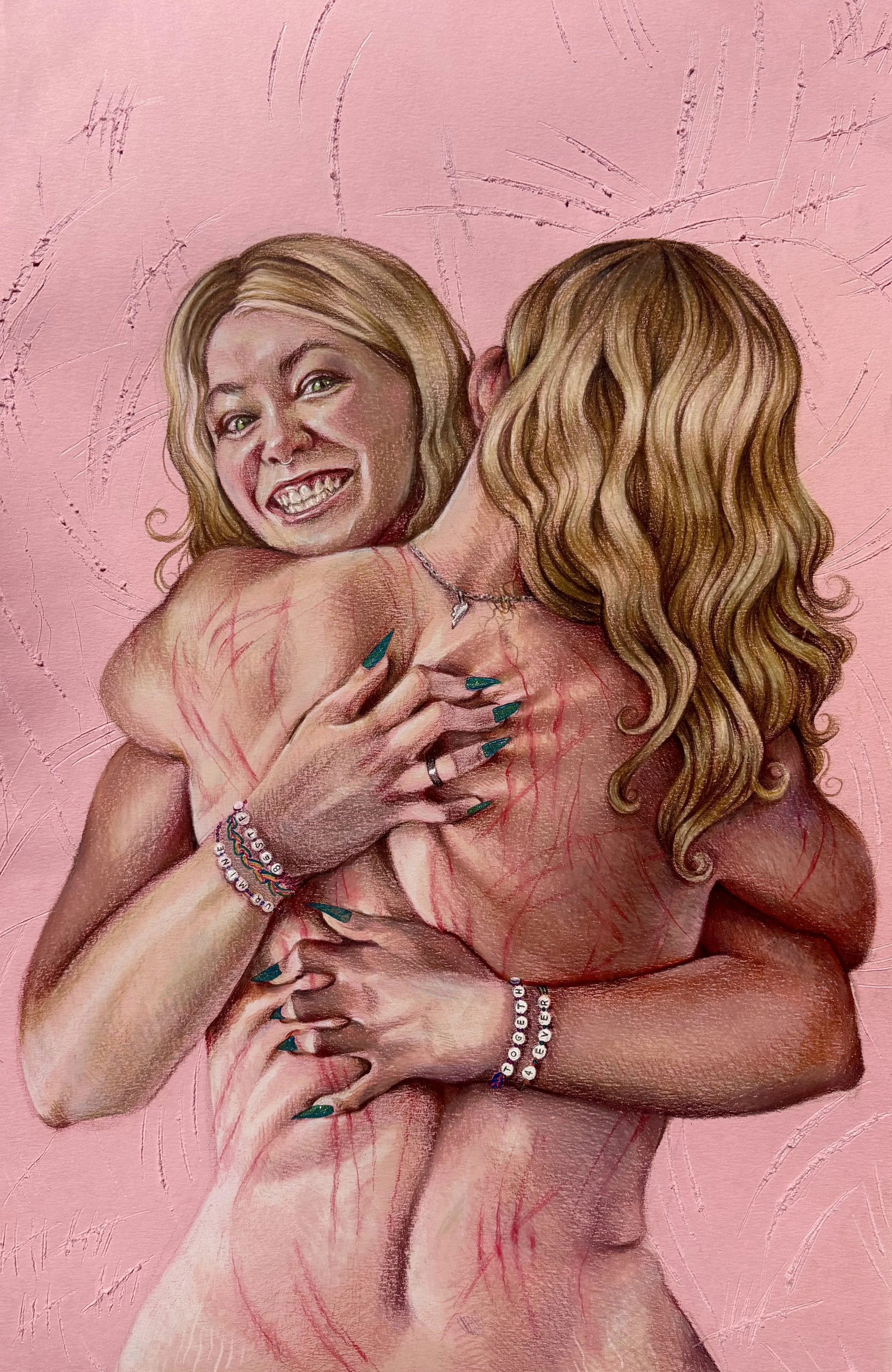
I have made positive work about girlhood in the past, but this series explores the darker side of female relationships. I use myself as the only figure to both relinquish blame on one party in the dynamic, and allow the viewer to read the drawing in a variety of ways. It simultaneously shows the consequences of low self-esteem and how that can be projected onto others.
Hair, nails, glitter, jewelry, and other signifiers of femininity are used as symbols of betrayal, emotional entanglement, and beauty. Many misogynistic tropes about women and women hating each other stem from this need to be more beautiful, think Snow White, Death Becomes Her, etc. This paints women as shallow or vapid, but patriarchy tells women that beauty is our greatest source of power; it only makes sense that this would come into play in our relationships. Fighting between women gets reduced to petty, shallow drama to be brushed off as bitchy cat-fighting.
Women’s way of forming community is often much more complex and political than the stereotypical ways men form connections. Many of the men I’ve known have told me that they don’t open up to their male friends and reserve that emotional intimacy for their girlfriends. Women are often super emotionally intimate with their friends, forming deeper, more sacred bonds that can lead to extra heartbreak when the relationship ends, sometimes explosively. Someone who knows you that well can cut you deeper. A lot of the friendship breakups I’ve experienced were harder than a romantic breakup. I’ve also noticed that loyalty is a big thing for girls, where I haven’t seen the same for guys. However, women are conditioned to be polite, nice to everyone, and inclusive. Don’t get hysterical or express anger. This can lead to resentment and passive aggression, something I like to explore through tropes of sugar-coating and back-stabbing.
This series has allowed me to reflect both on my past ways of thinking and the ways I’ve been treated by others. Sometimes you are the bad guy, sometimes you are the victim, sometimes you are both. Learning to spot this, work on yourself, and pick better people to be around is a crucial part of growing up. These kinds of mentalities are most poignant in adolescence, but some people never shake it. I’m fascinated by the psychological states that lead people to do the things they do.
I have been told that my artwork is “negative,” which is true, but I simply find conflict more interesting, especially when paired with my girly aesthetics and interests. Life isn’t sunshine and rainbows all the time, and I like exploring that.
There have been a lot of conversations online about “bad friendships” and envy. There was a girl who posted a TikTok explaining how she felt when she was envious of her friend, with self-awareness and accountability. The internet promptly tore her to shreds for not being a “girl’s girl” and being toxic. I want this series to open the viewer up to conversations about friendships that are both honest, constructive, and self-reflective. Envy is a shameful emotion, but a human one. There is extra pressure on women to have perfect relationships, but this is far from reality. Acknowledging how we really feel can be helpful in creating better, healthier relationships.